










California
Broken Bones Attorneys
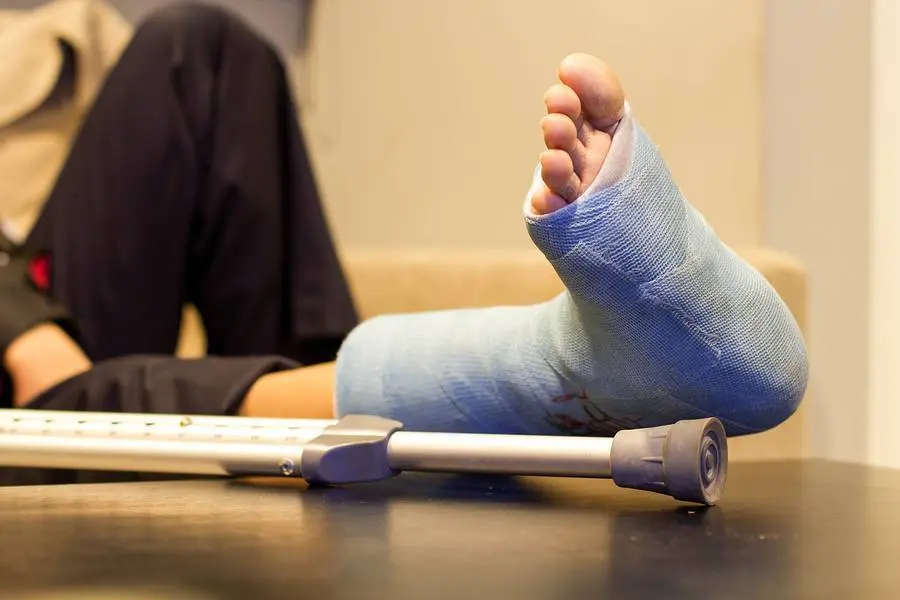
We Have Recovered Millions For Our Clients Suffering From Broken Bones!
Broken bones might not seem like the most severe type of injury, but there are 206 bones in the human body, and multiple different levels of severity when it comes to breaks. Those who have suffered from broken bones in their lifetime may understand that not only are they painful, they can also put you out of commission for an extended period.
Breaking a bone is an extremely common injury. Each year over 8.8 million Americans break a bone. Despite their commonality, most breaks are minor and can be fixed rather easily. Bad breaks or breaks that are difficult to fix may cause complications and long-term side-effects, as well as being extremely costly.
The biggest problem with breaking a bone is the length of time it takes to fully recover, particularly if it is a larger bone such as a femur or humerus. Whatsmore, multiple breaks throughout the body at one time can be one of the most debilitating types of injury.
Not only is treatment and aftercare expensive, but it often prevents victims from being able to work for extended periods. This economic hardship can be very difficult to overcome and can have serious financial repercussions. If you or a loved one has suffered a broken bone injury in an accident due to the negligence of another party, you are entitled to compensation. The professional and experienced bone injury lawyers at the Law Offices of Samer Habbas will work tirelessly to help you get the best compensation possible. With multiple offices located in Irvine, Los Angeles, El Segundo, San Diego, and Riverside, our lawyers represent accident victims throughout California. We have successful recoveries in San Jose, Oakland, San Francisco, Stockton, Merced and other cities throughout Northern and Central California. To schedule a free consultation with one of our accident attorneys, call 888-848-5084.
The Common Causes of Broken Bone Injuries
Broken bones are commonly caused by automobile and slip or fall accidents. But several different incidents can lead to bone injury, including:
- Vehicular incidents
- Bicycle accidents
- Slip and fall accidents
- Pedestrian accidents
- Truck accidents
- Construction site accidents
- ATV or Recreational accidents
- Accidents caused by transportation such as trains or airplanes
If you have been involved in any type of incident caused by the negligence of another party that has led to a broken bone injury, you’re entitled to compensation. Our professional attorneys have the necessary knowledge and expertise to successfully litigate these cases.
Types of Bone Fracture
Broken bones don’t just range in the cause, they also range in type. There are many different forms of a break, with some benign and more severe than others. No matter the type of break you sustain, they are painful and can be extremely debilitating. Broken bones fall into four main categories: open, closed, displaced, or non-displaced. The severity of breaks or fractures depends on where they occur and whether surrounding bones or tissue was also damaged. Knowing what type of injury you have experienced will help you and your doctor create a rehab program to reconstruct the bone and restore functionality. The most common types of bone breaks include:
- Complete fracture: A complete fracture occurs when the bone is completely broken in half leaving a gap between the two or more remaining pieces of bone. A complete fracture often requires immediate or surgical attention.
- Incomplete fracture: An incomplete fracture is any fracture that does not cut entirely through the bone. These are commonly referred to as greenstick or hairline fractures.
- Compound fracture: This occurs when the broken bone cuts through the skin leaving the area around the bone vulnerable to infection or tissue damage.
- Compression fracture: A compression fracture occurs in the spine when thin and soft matter around the vertebrates collapses and compresses the shape of the spine.
- Linear fracture: These types of fractures run along the long axis of the bone but do not displace any of the bones.
- Transverse fracture: A transverse fracture occurs across the bone possibly resulting in a complete fracture.
- Spiral fracture: These fractures occur as a result of a strong twisting force on long bones usually in arms or legs. These often require surgery or physical therapy to reconstruct.
- Comminuted fracture: This fracture occurs when the bone is broken into more than two separate fragments. This can occur when there is a high-impact event or when the injury occurs to a fragile bone such as a finger or toe.
- Avulsion fracture: An avulsion fracture occurs when a piece of the injured bone separates from the rest of the bone or tears a tendon or ligament in the process.
- Buckle fracture: A buckle fracture occurs when the bone bends or “buckles” but is less than a complete fracture.
How is a broken bone treated?
No matter the type or severity of your broken bone injury, you need to get medical attention as quickly as possible. If you experienced a complete or compound fracture any delay in medical attention can make the injury even more serious with an infection or permanent tissue damage. Other delays can lead to long-term pain, decreased mobility, or other issues that require extra attention.
Any broken bone injury can also give rise to other medical issues such as:
- Internal bleeding
- Skin lacerations
- Punctured organs
- Nerve damage
- Muscle damage
- Tissue damage
- Blood clots
- Decreased mobility
The recovery time can range from a couple of weeks to several months, depending on the type of fracture and issues you experienced. Common solutions include a combination of casting, surgery, or physical therapy. Your medical and legal team will help ensure that you receive the treatment necessary to get you back on your feet and do all the things you love again.
Damages available for a broken bone injury
The experienced broken bone injury attorneys at the Law Offices of Samer Habbas & Associates will help you fight for the compensation you deserve. If your broken bone injury was caused by negligent or intentional actions of another, we can help determine the right legal strategy for you.
There are various types of economic and non-economic damages available for victims of broken bones. The economic damages help cover the costs of medical expenses or lost wages, while the non-economic damages are meant to cover pain and suffering experienced as a result of the injury.
The types of damages available to you include:
- Medical expenses: Any hospital bills you racked up as a result of your injury can be recovered in a lawsuit. These include hospital visits, surgery costs, and physical therapy.
- Lost wages: If your injury leaves you unable to work for several weeks or even months, you can get compensated for the wages you lost as a consequence.
- Future earnings: If your injury prevents you from performing certain work or makes you less competitive for a promotion, you might be able to recover lost future earnings.
- Property damage: If any of your personal property was also damaged in your accident, you may be able to recover the costs incurred to repair or replace your item.
- Pain and suffering: If your injury was especially difficult for you or your family to deal with, either because of the injury itself or the lasting consequences such as financial difficulty, you might also be able to recover damages for the emotional pain you experienced.
California employs a pure comparative negligence scheme for determining liability in a personal injury claim. So, if you are contributorily negligent for your accident, you may still have a valid claim. For instance, let’s say you were in an automobile accident where the other driver was speeding through a red light but you were making an illegal turn. The court may determine that the other driver was 75% responsible compared to your 25%. If the damages amounted to $100,000 then the amount you would be eligible to receive would only be $75,000.
Contact an Experienced Orange County Personal Injury Attorney

If you or a loved one has experienced a broken bone injury due to the negligence of another party, you should discuss your legal options with an attorney as you may be entitled to compensation. The Irvine personal injury lawyers at the Law Offices of Samer Habbas & Associates can then help determine if you have a valid head injury claim.
With multiple offices located in Irvine, Los Angeles, El Segundo, San Diego, and Riverside, our lawyers represent accident victims throughout California. We have successful recoveries in San Jose, Oakland, San Francisco, Stockton, Merced and other cities throughout Northern and Central California. For more information or to schedule a complimentary consultation with one of our attorneys, please call 888-848-5084.
Frequently Asked Questions
How much is a broken bone case worth?
There’s no standard figure, because the same break can be a minor setback for one person and a life change for another. The main drivers are which bone and what type of fracture, whether surgery with plates, screws, or rods was needed, how well it healed, any lasting limits, how long you were out of work, and how strong the proof of fault is. Medical costs and lost income set the floor; pain, disruption, and permanent effects drive the rest.
The first X-ray looked normal, but a fracture showed up later. Can I still file?
Yes. Hairline and small-bone fractures, in the wrist, foot, or hip for example, can be invisible on the first films and appear on a follow-up image or MRI days later. What matters is that the accident caused it, and a prompt return to the doctor when pain doesn’t improve helps establish that. If a fracture was visible and simply missed or misread, that may raise a separate issue worth discussing with a lawyer.
My health insurance already paid most of the bills. Can I still recover medical expenses?
California limits past medical damages to the amounts actually paid or owed, not the billed price (the Howell v. Hamilton Meats rule), so the hospital’s sticker price isn’t the number. Health insurers, Medi-Cal, Medicare, and hospitals may have liens or reimbursement rights against your settlement, and those can often be negotiated down. Sorting out liens before settling keeps you from walking away with less than you expected.
My child broke a bone in an accident. Are the rules different?
They are. For most injury claims the filing deadline is paused until a child turns 18, though claims against public entities have their own procedures. Growth plate fractures need follow-up for months or years because they can affect how the bone develops, and any settlement for a minor has to be approved by a judge. Hold on to pediatric orthopedic records, since they can matter years later.
Does it matter if the break was open, displaced, or a clean fracture?
It does, mostly through what the treatment looks like. Open (compound) fractures carry infection risk and often need surgery; displaced and comminuted breaks tend to need plates, pins, or rods; hairline fractures may heal in a cast or boot. More invasive treatment generally means higher medical costs, longer recovery, and a higher chance of lasting problems like arthritis, a bone that won’t knit, or a later operation to remove hardware.
I’m self-employed or paid hourly. How do I prove lost income from a broken bone?
Records do the work: tax returns, invoices, bank deposits, 1099s, scheduling records, and letters from clients or employers about jobs you couldn’t take. For gig and freelance workers, calendars and prior-year earnings help show what you would have made. A doctor’s note stating when you couldn’t work, and when you could return with restrictions, anchors the time period.
I’m older or have osteoporosis. Does that hurt my broken bone claim?
Not legally. A defendant is responsible for the harm their conduct causes, even if the injured person is more fragile than average. Insurers still try to argue the bone would have broken anyway, so records of your health before the accident, along with a doctor tying the fracture to the impact, matter. Older adults can also recover for complications like longer rehab, loss of independence, or a decline after a hip fracture.
What other costs can be part of a fracture claim?
Beyond hospital and surgery bills, claims can include physical therapy, crutches, walkers, braces, medication, mileage to appointments, help at home during recovery, and future procedures. When a spouse or family member provides daily care, the value of that care can be part of the claim too. Keep receipts, a simple log of appointments and mileage, and notes on tasks you couldn’t do.
When should I settle a broken bone case?
Not when the cast comes off. A fracture isn’t fully resolved until the bone has healed and your doctor can say whether you’ll have lasting limits, whether hardware will need to come out, or whether arthritis is likely. Settling before that point can leave later surgeries and reduced function unpaid. If you’re being pushed for a quick number, ask what future care is built into it.
How long do I have to file a lawsuit over a broken bone?
Two years from the date of injury in most cases (Code of Civil Procedure 335.1), and six months to file a written claim when a public entity such as a city, school district, or transit agency is involved. If a child was hurt, different timing can apply. Earlier is better regardless, because witness memories and surveillance footage fade quickly.






 Free Consult
 Call 24/7