






Cal/OSHA Forklift Safety Requirements: What to Know if You’ve Been Injured
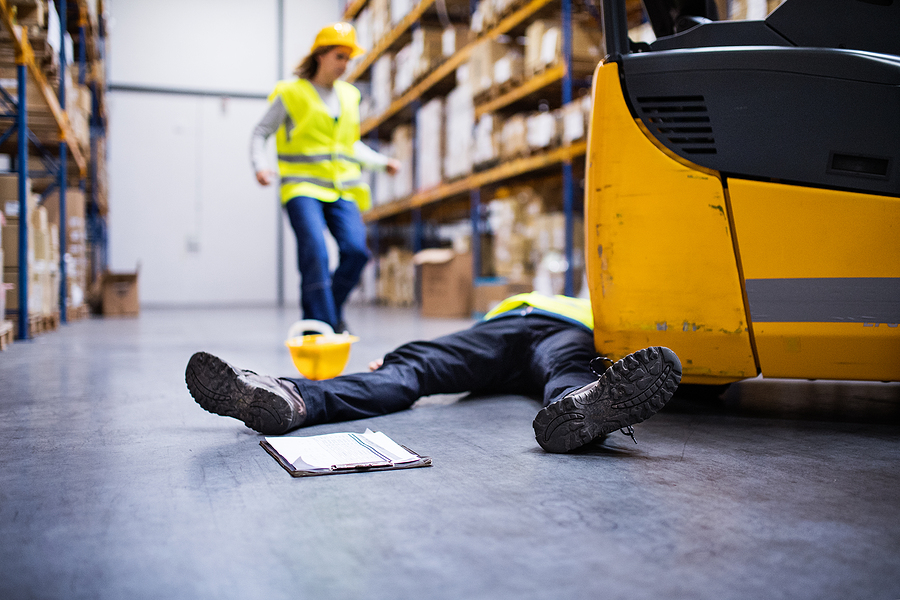
Forklifts play a crucial role in moving heavy materials on construction sites, in warehouses, retail environments, and across industrial facilities. But when operated without proper care or oversight, these machines can quickly become dangerous, leading to serious injuries or even death. That’s why California law holds employers to a high standard under Cal/OSHA, the Division of Occupational Safety and Health, to ensure workers are kept safe from avoidable harm.
If you’ve been injured in a forklift accident in California, understanding these safety rules isn’t just important—it’s essential. These laws were designed to protect workers like you. And when employers ignore them, they can and should be held accountable.
Forklift Operator Training Requirements in California
Under Cal/OSHA Title 8, Section 3668, no one is legally permitted to operate a forklift without first being trained and certified. That training must include both formal instruction and hands-on practice in a setting that resembles the employee’s actual work environment. Once training is complete, the worker’s ability to operate the machine must be evaluated by a qualified individual.
Employers are required to document these certifications and to maintain them over time. Certification is not a one-time event—it must be updated if an operator changes job roles, starts using different equipment, or is involved in an accident or near miss. If any of these situations occur and retraining is skipped, the employer is breaking the law.
These rules are in place to prevent accidents and ensure every worker is adequately prepared. When corners are cut or documentation is missing, workers are often the ones who pay the price.
Are Daily Forklift Inspections Required?
Yes. California law mandates that forklifts must be inspected at the beginning of each shift. This is spelled out in Section 3650(t)(7), which requires operators to check key components such as the tires, brakes, horn, lights, steering, battery or fuel system, and the lifting mechanisms—including the forks and chains.
If anything appears defective or unsafe, the vehicle must be removed from service immediately and cannot be used again until it is repaired and confirmed safe. This daily inspection process is one of the simplest and most effective ways to prevent sudden equipment failures that can cause injuries.
An employer that fails to implement and enforce daily checks is exposing workers to unnecessary risks—and may be legally responsible for any harm that results.
Is It Mandatory to Use a Seat Belt While Operating a Forklift?
If the forklift is equipped with a seat belt or operator restraint system from the manufacturer, Cal/OSHA requires that it be used. This rule is detailed in Section 3650(t)(33) and Section 3653(a). Restraints are particularly critical in rollover scenarios, where failure to wear a seat belt can result in the operator being ejected and crushed.
Employers are not only required to provide seat belts, but also to train workers to use them and enforce their use on the job. If you were injured in a tip-over accident while unrestrained, it’s important to examine whether the employer did everything the law required to keep you safe.
What Driving Rules Do Forklift Operators Have to Follow?
Section 3650(t) outlines numerous specific driving rules designed to prevent collisions, tip-overs, and pedestrian accidents. Operators must drive at a safe speed and follow all established traffic rules. They must maintain a safe following distance—ideally three truck lengths or a three-second time gap between forklifts moving in the same direction. Passing at blind corners, intersections, or other risky locations is prohibited.
Drivers are required to sound the horn at cross aisles and any location where vision may be obstructed. If a load blocks forward visibility, the forklift must be driven in reverse. Operators must always look in the direction of travel and confirm that the path is clear before moving.
The law also bans stunt driving and horseplay outright. And it’s illegal to drive a forklift toward someone who is standing in front of a fixed object such as a bench or wall, as this can trap the person and cause serious crushing injuries.
Can a Forklift Be Left Unattended?
If a forklift is left unattended—which means the operator is more than 25 feet away or out of sight—Cal/OSHA requires several safety steps. The brakes must be set, the forks lowered, and the mast brought to vertical. Either the power must be shut off with the wheels blocked, or the power can remain on only if the wheels are blocked both front and rear.
Even if the operator is within 25 feet and can see the machine, the controls must be set to neutral, the brakes engaged, and the forks fully lowered. These rules are designed to prevent unintentional movement or tip-overs when forklifts are parked. Employers must ensure their teams understand and follow these procedures every day.
How Do Cal/OSHA Rules Handle Loading and Unloading?
Loading and unloading are among the most dangerous moments in forklift operation. Cal/OSHA requires that operators check trailer flooring for structural integrity before entering. Trailers must be secured with wheel chocks or other restraints, and the dock plate must be in place and safe before the forklift drives aboard.
On ramps or grades, extra caution is necessary. Forklifts must ascend or descend slowly, and when carrying a load on a slope, the truck must face uphill. Loads must be tilted back when climbing and raised only as far as needed to clear the ground.
If you were hurt while loading or unloading, it may be the result of your employer failing to secure the trailer properly, skipping inspections, or rushing the process—each of which violates Cal/OSHA rules.
Are There Limits on the Type of Load a Forklift Can Carry?
Yes. The law is clear that a forklift may not be loaded beyond its rated capacity, and the load must be secure and stable before the machine is moved. A poorly balanced load—or one that blocks the driver’s visibility—is a serious hazard. Elevated loads cannot be tilted forward except when being placed on a rack, and even backward tilting must be kept to the minimum necessary for load stability.
Extreme care must also be taken when forklifts are equipped with attachments or handling irregularly shaped items. When two or more forklifts are used to move a single load, the combined lifting capacity of all machines must not be exceeded.
These rules protect both operators and workers nearby from crushing accidents and falling materials.
Do Employers Have to Consider Environmental Hazards?
Section 3668(c)(2) requires that forklift training include site-specific hazards. These may include narrow aisles, slick or uneven floors, poor ventilation, and high pedestrian traffic. In areas with limited lighting—defined as less than two foot-candles—forklifts must be equipped with directional lighting. When vision is blocked, operators must sound the horn or even travel in reverse to avoid collisions.
Each job site has its own risks, and it’s the employer’s legal duty to prepare workers for them.
What Are the Consequences of Violating Cal/OSHA Rules?
When employers ignore safety rules, they face more than just regulatory fines. Cal/OSHA may issue stop-work orders or impose penalties, but workers also have legal options. If you’ve been injured, these violations can support a workers’ compensation claim—and in some cases, a personal injury lawsuit. Violations of Cal/OSHA standards may be used as evidence that your employer failed to provide a safe workplace.
What Should You Do After a Forklift Injury?
After a forklift accident, the first steps are critical. You should report the incident to your employer and get immediate medical attention. Even if you feel okay, injuries may appear later. Document what happened, keep track of medical records, and speak with an experienced injury attorney. Workers’ compensation may not be your only option, especially if third parties like contractors, manufacturers, or site owners were involved.
Speak With a California Forklift Accident Lawyer

At Law Offices of Samer Habbas & Associates, our work injury lawyers know how devastating forklift accidents can be. We’ve helped injured workers across Southern California recover compensation for their medical expenses, lost income, pain, and more. If you were hurt in a forklift accident and believe your employer failed to follow Cal/OSHA rules, we’re here to help. Call our Orange County forklift accident lawyers today at 949-727-9300 for a free consultation—or contact us online. You deserve answers, accountability, and a legal team ready to fight for you.





 Most Common Forklift Injury Types in the Workplace
 Free Consult
 Call 24/7