




Glendale Preschool Car Crash Injures 8 Children
Law Offices of Samer Habbas & Associates, PC Analyzes Liability and California Personal Injury Law
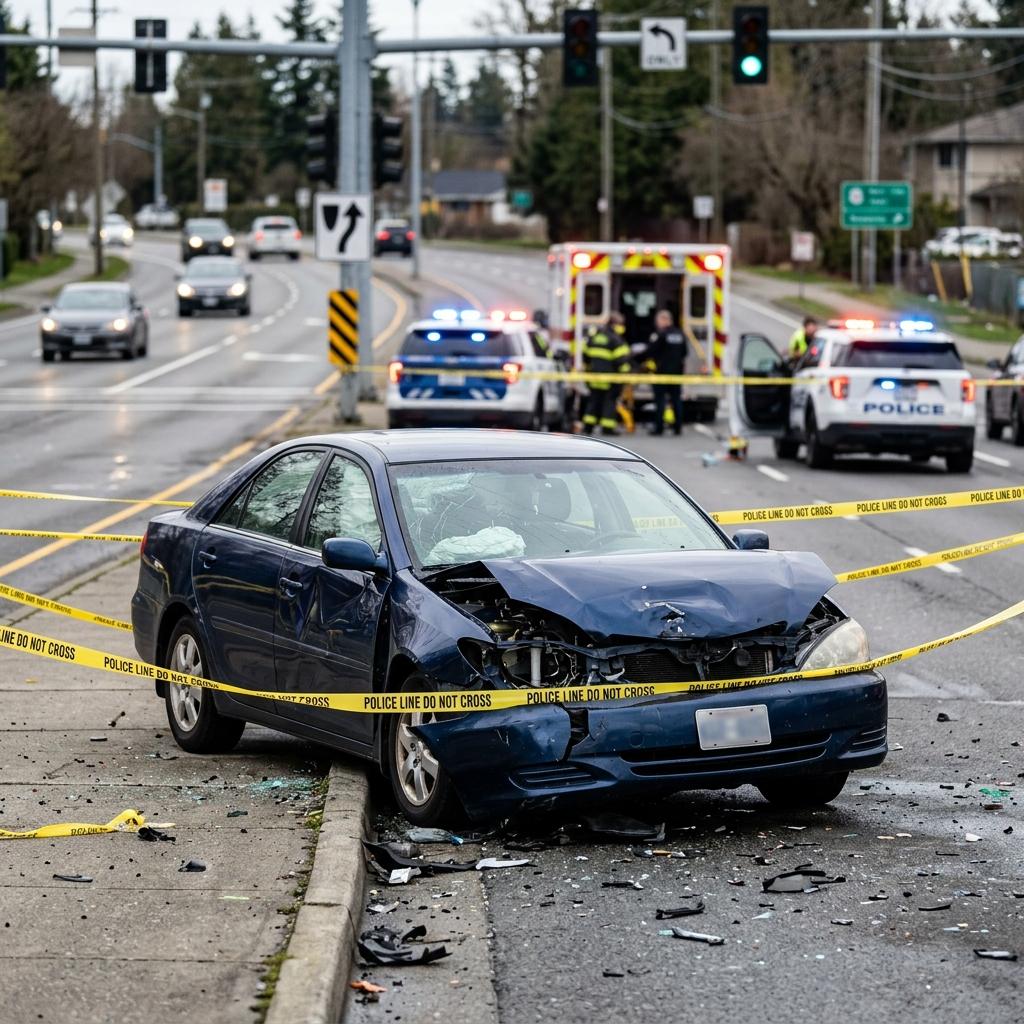
Our hearts go out to the Glendale community and the families affected by the harrowing news out of Pacific Avenue on Friday afternoon, where a vehicle crashed directly into the Grandview House preschool, leaving eight young children hospitalized. The victims, all between four and five years old, were subjected to a terrifying ordeal when a black sedan veered off the road and slammed into the school building, which sits adjacent to a playground. During this incredibly difficult time, our thoughts and deepest prayers are with the injured children, their families, and the school staff. Dealing with the immediate aftermath of a catastrophic accident involving children is any parent’s worst nightmare, and the emotional and physical healing process will require extensive care, support, and medical treatment.
As families focus on the recovery of their children, understanding their legal rights is a critical step in ensuring they receive the support they need. In cases where negligent driving leads to severe harm or the tragic loss of a loved one, California law provides clear avenues for legal recourse. Under the state’s wrongful death statute, California Code of Civil Procedure (CCP) § 377.60, surviving family members can seek compensation for their losses. Furthermore, victims of serious accidents must be mindful of the strict California statute of limitations under California Code of Civil Procedure (CCP) § 335.1, which establishes a two-year deadline for filing personal injury and wrongful death lawsuits. For immediate assistance and advocacy, the dedicated Pedestrian Accident Attorney team at the Law Offices of Samer Habbas & Associates, PC is ready to guide you through this process and fight for the rights of your family to secure the maximum compensation you deserve.
About the Glendale Preschool Car Crash: Details and Investigation
On the afternoon of Friday, August 7, 2026, a major emergency response was triggered at the Grandview House preschool in Glendale, California, which shares its facility with Temple Sinai of Glendale. NBC Los Angeles and other local news outlets reported that the collision occurred at approximately 1:54 p.m. on Pacific Avenue near Stocker Street. A black sedan veered off the roadway, crossed the sidewalk, and ripped into the preschool building. First responders from the Glendale Police Department and the Glendale Fire Department arrived quickly on the scene to treat the injured. Ultimately, eight children, all aged four or five, were transported to local hospitals for medical evaluation and treatment of their injuries. Witnesses described a scene of chaos and panic, with neighbors like Mahmoud Hijazi jumping in immediately to help free the children and calm the terrified students.
Glendale Police Department investigators believe that the crash was accidental, and police have stated that driving under the influence (DUI) is not suspected and no immediate arrests are expected. However, a full and independent investigation is crucial to uncover the exact cause. Accidents where vehicles crash into buildings typically stem from distracted driving, speeding, mechanical failures (such as brake loss), medical emergencies, or pedal misapplication (mistaking the accelerator for the brake). From a legal standpoint, theories of liability would center on driver negligence (failing to operate the vehicle with reasonable care), vicarious owner liability under California Vehicle Code § 17150 (holding the vehicle owner liable for injuries caused by a permissive driver), and potentially premises liability if the property lacked safety barriers to protect occupants from traffic on the adjacent roadway.
Why Pacific Avenue and Glendale School Zones Are Dangerous for Pedestrians and Children
The area surrounding Pacific Avenue and Stocker Street is a bustling Glendale neighborhood characterized by school zones, religious centers, and residential traffic. However, school zones can become incredibly dangerous due to high traffic density during drop-off and pick-up hours, driver distraction, and limited visibility. Despite posted speed limits, many drivers fail to exercise the heightened caution required in zones where children gather. According to data from the National Highway Traffic Safety Administration (NHTSA) and the California Office of Traffic Safety (OTS), pedestrian injuries and fatalities in school zones remain a persistent crisis, with young children under the age of nine being at the highest risk due to their small size and developmental inability to accurately judge vehicle speeds.
In addition to driver negligence, the physical design of the roadway itself can contribute to these devastating incidents. Under California Government Code § 835, a public entity (such as the City of Glendale or the State of California) may be held liable for injuries caused by a dangerous condition of public property. If a roadway design features inadequate traffic controls, a lack of protective guardrails, poorly positioned pedestrian crossings, or other hazards that the city knew or should have known about, a dangerous condition claim can be pursued. Demonstrating public entity liability requires establishing that the defect created a reasonably foreseeable risk of injury, that the public entity had notice of the hazard, and that they failed to take timely corrective action.
California Wrongful Death Law: What Families of Car Accident Victims Can Recover
When a severe accident occurs, California law permits victims and their families to seek financial recovery for their damages. If a collision results in a tragic fatality, surviving family members can file a wrongful death claim under California Code of Civil Procedure (CCP) § 377.60. A wrongful death lawsuit is designed to compensate the survivors for the losses they suffer due to the death of their loved one. Recoverable damages in a wrongful death action include:
- Loss of financial support that the deceased would have provided to the family.
- Funeral and burial expenses.
- Loss of love, companionship, comfort, care, assistance, protection, affection, society, and moral support.
In contrast, a survival action, brought under California Code of Civil Procedure (CCP) § 377.30, is filed on behalf of the deceased’s estate. Unlike a wrongful death claim, a survival action seeks damages for the losses the deceased person suffered before their death, rather than the losses of the surviving family members. This can include pre-death medical expenses, property damage, and, under recent California law, damages for the deceased’s pre-death pain, suffering, or disfigurement. Any recovery from a survival action goes to the estate and is distributed according to the deceased’s will or California’s intestate succession laws.
For cases involving non-fatal but severe injuries to children, such as those in the Glendale preschool crash, parents can file a personal injury claim on behalf of their minor child. These claims seek compensation for the child’s medical bills, future medical care and rehabilitation, pain and suffering, emotional distress, and trauma caused by the crash.
Who Can Be Held Liable When a Child or Pedestrian Is Injured or Killed?
The Other Driver
The primary target of liability in most car accidents is the negligent driver. In California, drivers owe a duty of care to all road users, particularly children in school zones. If a driver fails to control their vehicle due to distraction, speeding, or recklessness, they are liable for the resulting harm. Additionally, under California Vehicle Code § 17150, the registered owner of a vehicle is liable for death or injury resulting from the negligent operation of the vehicle by any person operating it with the owner’s express or implied permission. In egregious cases, such as those involving driving under the influence (DUI) or street racing, victims may also seek punitive damages to punish the driver’s conscious disregard for safety.
Government Entities — Road Defect Cases
If a dangerous condition on the roadway or sidewalk contributed to the crash, the public entity responsible for maintaining that road can be held liable under California Government Code § 835. This includes cases where there is a lack of protective bollards or barriers in areas where vehicles are known to speed, or where poor street design causes vehicles to lose control. However, bringing a claim against a government entity is subject to strict rules. Under California Government Code § 911.2, an administrative claim must be filed with the government agency within six (6) months of the date of the accident. Failing to file this claim within the six-month window will bar the victim from pursuing a lawsuit.
Defective Products / Manufacturers
In some instances, a crash is caused not by driver error, but by a sudden mechanical failure. If a vehicle’s brakes, steering system, tires, or acceleration pedals malfunction, the manufacturer of the vehicle or the defective part can be held strictly liable under California’s product liability laws. An independent investigation by automotive experts is essential in these cases to extract and analyze data from the vehicle’s event data recorder (the “black box”) and determine if a manufacturing or design defect was the root cause of the crash.
Property Owners and School Operators (Premises Liability)
When a vehicle crashes into a building like a preschool, premises liability is another critical angle of investigation. Under California premises liability law, property owners and occupiers have a duty to keep their premises in a reasonably safe condition. If a school, daycare, or temple is located adjacent to a high-speed or dangerous roadway, the operator must take reasonable measures to protect children and staff. This can include installing impact-resistant safety bollards, reinforced walls, or protective barriers. A failure to implement these common-sense safety features may constitute negligence. For families navigating these complex premises claims, consulting an experienced Anaheim Premises Liability Lawyer can help identify all potential sources of recovery.
California’s Pure Comparative Fault System
Insurance companies frequently attempt to deflect blame onto the victims or third parties to reduce their financial exposure. In California, liability is governed by the rule of “pure comparative fault.” This means that fault is apportioned among all parties involved in an accident based on their level of responsibility. Unlike states with modified comparative fault systems that bar a plaintiff from recovering damages if they are 50% or 51% at fault, California’s pure comparative fault system allows a victim to recover damages even if they are primarily responsible for the accident. The total recovery is simply reduced by the victim’s percentage of fault. For example, if a jury determines that a plaintiff suffered $1,000,000 in damages but was 20% at fault, the recovery is reduced by 20%, resulting in a final award of $800,000. In cases involving small children, courts hold that a child of tender years (typically under five) is legally incapable of contributory negligence, meaning no fault can be apportioned to them.
Statute of Limitations: Don’t Wait to Protect Your Family’s Rights
When a traumatic event like the Glendale preschool crash occurs, taking legal action is often the last thing on a family’s mind. However, delaying can have catastrophic consequences for your case. In California, the general statute of limitations for personal injury and wrongful death lawsuits is two (2) years from the date of the accident under California Code of Civil Procedure (CCP) § 335.1. If you fail to file a lawsuit within this period, you lose your right to seek compensation forever. The deadline is even shorter if a government entity is involved; as noted under California Government Code § 911.2, you have only six (6) months to file a formal administrative claim. Furthermore, early investigation is crucial because evidence can quickly disappear. Security camera footage may be overwritten, vehicle black box data can be lost, skid marks fade, and witnesses’ memories fade. Retaining a lawyer immediately allows for the swift preservation of evidence and the construction of a strong case.
What Samer Habbas & Associates, PC Does When We Take a Wrongful Death Case
At the Law Offices of Samer Habbas & Associates, PC, we take immediate and aggressive action when we represent families dealing with wrongful death or catastrophic injuries. Our process begins the moment we are retained. We deploy independent accident investigators to the crash site to document the scene, preserve physical evidence, and obtain traffic camera footage. We draft formal preservation of evidence letters to all involved parties, preventing the destruction of vehicle black box data and safety logs. Our legal team collaborates with top-tier accident reconstructionists, medical specialists, and financial experts to build a comprehensive picture of liability and the lifetime costs of the injuries. We also manage all communications and negotiations with insurance companies, protecting you from bad-faith tactics, and handle all administrative filings, ensuring no government claim deadlines are missed.
Our track record of success speaks for itself. Over the years, our firm has recovered over $380,000,000 for injured clients in Southern California. Some of our notable results include:
- $11,000,000 — Top single case recovery for a catastrophic injury.
- $4,007,015.24 — Notable personal injury settlement.
- $3,450,000 — High-value settlement for a serious accident.
- $2,675,000 — Substantial settlement for a premises liability and traffic collision case.
- $2,500,000 — Recovered for victims of a major motor vehicle collision.
We are dedicated to holding negligent parties accountable and ensuring our clients receive the maximum possible recovery. You can view our full case results to see how we have successfully fought for clients throughout Southern California.
Contact Samer Habbas & Associates, PC After a Serious or Fatal Car Accident
Hundreds of Millions Recovered & Counting
If your child has been injured or you have lost a loved one in a car crash, you do not have to walk this path alone. The Law Offices of Samer Habbas & Associates, PC are here to guide you through the process and fight for you and your family. We will guide you through the process and fight for you & your family to get the compensation you deserve. We are available 24/7 to provide you with a free case review.
Call Our Toll-Free Hotline: 888-848-5084
Free Case Review Call Now 24/7
Frequently Asked Questions — Fatal Car and Child Injury Accidents in California
Who is legally permitted to file a wrongful death lawsuit in California?
Under California Code of Civil Procedure (CCP) § 377.60, only specific individuals have the standing to file a wrongful death claim. This typically includes the surviving spouse, domestic partner, or children of the deceased. If these relatives do not exist, the claim may be filed by anyone who would be entitled to the deceased’s property under California’s intestate succession laws, such as parents or siblings.
If my child was injured at school or preschool, who can be held responsible?
Depending on the circumstances, multiple parties may share liability. The driver of the vehicle is directly responsible for their negligence. Additionally, if the vehicle is owned by someone else, the owner may be liable under California Vehicle Code § 17150. If the preschool failed to implement safety measures, such as bollards or barriers, the preschool or property owner could face a premises liability claim. Furthermore, if a public road defect contributed to the crash, a government entity may be held responsible under California Government Code § 835.
What is the difference between a wrongful death claim and a survival action?
A wrongful death claim (CCP § 377.60) compensates the surviving family members for their personal losses, such as lost financial support, funeral expenses, and loss of companionship. A survival action (CCP § 377.30) is filed on behalf of the deceased’s estate to recover damages for losses the deceased suffered prior to death, which may include pre-death medical expenses, property damage, and pain and suffering.
What if the driver who caused the crash claims it was a medical emergency or mechanical failure?
Drivers and insurance companies often use the “sudden medical emergency” defense or blame mechanical failures to escape liability. However, this defense is highly scrutinized. The defense must prove that the medical emergency was completely unforeseeable and that the driver lost control as a direct result. If a mechanical failure is blamed, we investigate whether the driver or owner neglected vehicle maintenance, or if a manufacturer is strictly liable for a defective part.
Should I speak to the driver’s insurance adjuster after an accident?
No. You should never speak to the other party’s insurance adjuster or provide a recorded statement without a lawyer present. Insurance adjusters are trained to extract statements that can be used to minimize your injuries or shift fault onto you. Let your attorney handle all communications with the insurance company to protect your rights.
How much does it cost to hire Samer Habbas & Associates, PC?
At the Law Offices of Samer Habbas & Associates, PC, we work on a contingency fee basis. This means there are no upfront costs, no hourly fees, and no out-of-pocket expenses. We only get paid if we successfully recover compensation for your case. If we do not win, you owe us nothing. This zero-barrier structure ensures that every injured victim has access to top-tier legal representation.
 Victims Killed in Catalina Island Helicopter Crash Identified
  Free Consult
 Call 24/7