









How Can Personal Health Conditions Impact a Slip and Fall Claim?
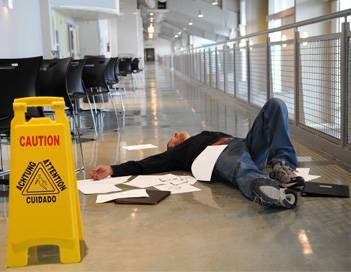
If you were injured in a slip and fall and you already had a medical condition, like arthritis, a prior back injury, or a recent surgery, you may be wondering whether you can still bring a claim. Under California law, the answer is yes. But your existing health issues will affect how the claim is handled, especially when it comes to proving what the fall actually caused. This article explains slip and fall cases involving pre-existing conditions and what it means for your potential slip and fall claim.
California Law on Property Owner Responsibility
In California, property owners and tenants have a legal duty to keep their property reasonably safe for people who are lawfully there. This includes fixing hazards, warning about unsafe conditions, and inspecting the property regularly. If they fail to do that and someone is injured as a result, they can be held liable.
This legal duty comes from California Civil Code § 1714(a), which makes everyone responsible — not just property owners, for injuries caused by their lack of ordinary care. In a slip and fall case, the injured person must show that the owner or occupier of the property was negligent in failing to keep the area safe, and that this failure caused the injury.
If you already had a medical condition, the property owner may argue that the fall didn’t really hurt you, or that it didn’t cause anything new. That’s where the issue of pre-existing conditions comes into play.
The “Take Your Victim As You Find Them” Rule
California follows a legal rule often referred to as the “eggshell plaintiff” rule. It means the person responsible for the injury can’t avoid liability just because the injured person was more vulnerable than average.
Let’s say you have osteoporosis and a minor fall leads to a serious fracture. The person who caused the fall is still responsible, even if someone else might have walked away with a bruise. The law doesn’t require you to be in perfect health to bring a claim. The only question is whether the accident caused harm — including harm that was more serious because of your condition.
This rule has been recognized in California courts for years and is consistent with the general principle in Civil Code § 3333: if someone’s negligence causes you harm, they must compensate you for the amount of damage actually caused, even if it’s more than expected.
How Aggravation of an Existing Condition Is Handled
In many slip and fall cases, the injured person had a prior medical issue that was stable or under control — until the fall made it worse. If that happens, California law allows you to recover for the “aggravation” of a condition that already existed (CACI No. 3927).
For example, if you had serious lower back pain that you were managing with physical therapy, but after the fall you needed surgery or couldn’t return to work, you may be entitled to recover for that worsening. But you will need to show that the fall made the condition worse, and by how much.
This issue — causation — becomes more complicated when there’s a long medical history. You don’t need to prove the fall caused all your pain, only that it contributed to your current condition in a measurable way.
Proving That the Fall Made Your Condition Worse
To succeed in a slip and fall case involving a pre-existing condition, documentation matters. Your medical records will be examined before and after the incident. These records help show whether the fall caused a new injury or aggravated something that was already there.
Under California Evidence Code § 801, testimony from your treating doctor or an independent medical expert can be used to explain how your condition changed after the fall. For example, an orthopedic specialist might compare imaging studies before and after the incident, and testify that the injury accelerated the need for surgery or led to permanent impairment.
Your own explanation of your symptoms also matters. Courts and juries want to understand how your daily life changed. If you were working full time, walking unassisted, or enjoying recreational activities before the fall, and now you can’t — that’s relevant. Witnesses like coworkers, family members, or physical therapists can also provide insight into your condition before and after the fall.
California’s pattern jury instruction CACI No. 3927 specifically addresses aggravation of pre-existing conditions. It makes clear that a person is entitled to compensation for any new harm, or any worsening of an existing condition, caused by another’s negligence.
Common Insurance Defenses and How to Respond
Insurance companies often try to limit or deny claims where the injured person has a medical history. They may argue that your current problems were already happening, or that they would have occurred anyway, even without the fall. These arguments are not unusual, but they don’t reflect how California law actually works.
The fact that your injury might have been “coming” — because of age, wear and tear, or a degenerative condition — does not let the property owner off the hook. If the fall sped up the condition or made it worse, that’s enough to seek compensation. Again, the medical records and expert opinions are key here.
If the case goes to trial, the court will look at whether the defendant’s negligence was a “substantial factor” in causing the harm, as required by California law. That standard comes from CACI No. 430, and it does not require the fall to be the only cause — just a significant one.
You should also know that under California Code of Civil Procedure § 335.1, you generally have two years from the date of the injury to file a lawsuit. If the injury occurred on government property, the time limit may be shorter — as little as six months — under the Government Claims Act (Gov. Code § 911.2). That’s why it’s important to act quickly, especially when your medical history may require more investigation.
Contact Los Angeles Slip And Fall Lawyer Samer Habbas

If you’ve suffered a fall on someone else’s property and already had health issues, you are not disqualified from making a claim. But your case may be more complex. You’ll need clear evidence that the fall made things worse, and California law gives you the right to be compensated for that aggravation.
Contact Law Offices of Samer Habbas & Associates by calling 949-727-9300 or contacting us online for a free consultation with a Los Angeles slip and fall lawyer. We can review your case, assess how your medical history may affect your claim, and help you understand your legal options under California law.





 Insurance and Slip and Fall Claims
 Free Consult
 Call 24/7