







What Happens If the At-Fault Driver Was Working at the Time of a Car Accident?
If the at-fault driver was working at the time of a car accident, their employer may also be held liable under California law if the driver was acting within the scope of their job. Depending on the circumstances, you may be able to pursue compensation from both the driver’s and the employer’s insurance policies for your injuries and related losses.
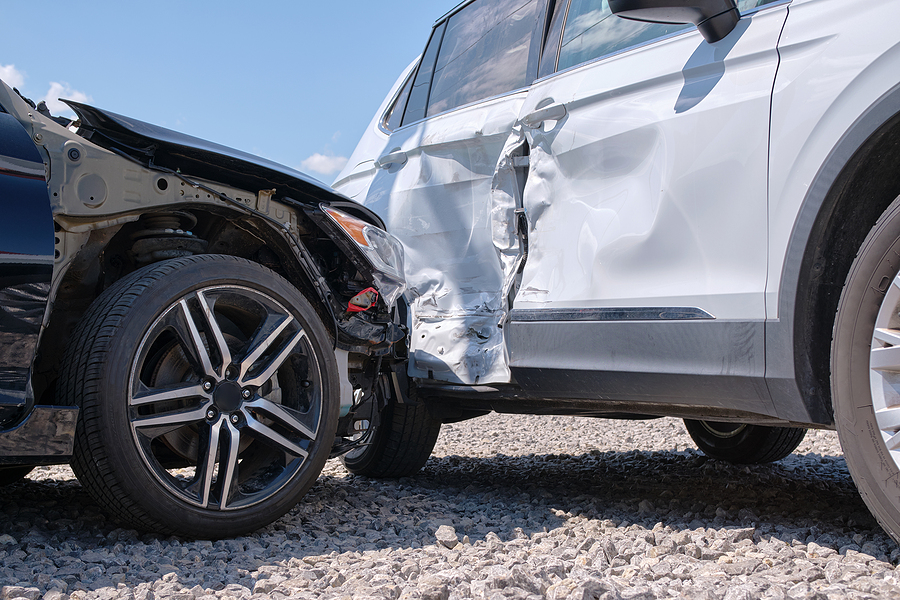
If you were injured in a car accident in Orange County, one of the most important questions is whether the driver who caused the crash was working at the time. That detail can significantly affect your legal rights, the parties involved in your claim, and the compensation available to you. When a driver is acting within the scope of employment, their employer may also be legally responsible under California law. This can expand your claim beyond the individual driver and provide access to additional insurance coverage.
Understanding how employment status affects liability is critical if you want to recover full compensation after a serious accident.
Why It Matters If the Driver Was Working
When a driver causes a crash while performing job duties, California law may allow you to hold the employer responsible. California Civil Code § 2338 provides that a principal is liable for the wrongful acts of an agent committed in the course of the agency’s business. In practical terms, if the driver was doing their job, the employer may share responsibility for your injuries.
This is important because employers often carry commercial insurance policies with higher limits than individual drivers. In Orange County, this commonly applies to delivery drivers, service technicians, construction workers, and employees traveling between job sites. Identifying employer involvement can significantly increase the compensation available in your case.
Understanding the Scope of Employment in California
Not every accident involving an employee automatically makes the employer liable. The key issue is whether the driver had been acting within the “scope of employment” when the crash occurred. California law focuses on whether the conduct was related to job duties or reasonably connected to the work the employee was hired to perform.
For example, a driver making deliveries or traveling between work locations is generally considered to be acting within the scope of employment. However, if the driver was off duty or using the vehicle for personal reasons, the employer may argue they are not responsible.
There are also gray areas. A minor personal stop during a work-related trip may still fall within the scope of employment, while a significant deviation may not. Determining where the line is drawn often requires a careful review of work records, employer policies, and the purpose of the trip.
California Laws That May Apply to Your Case
Several California statutes may affect your claim if the at-fault driver was working at the time of the crash. California Civil Code § 1714 establishes the general duty of care and forms the foundation of negligence claims.
California Civil Code § 2338 is central to employer liability and allows an injured person to hold an employer responsible for the acts of an employee carried out in the course of business. California Vehicle Code § 17150 states that a vehicle owner can be held liable for injuries caused by a person driving the vehicle with permission, which may apply if the employer owns the vehicle.
California Vehicle Code § 17151 limits liability under the permissive-use statute, although this limitation does not necessarily apply when liability is based on employer responsibility under agency principles.
If the driver was working for a public entity, additional rules apply. California Government Code § 911.2 typically requires a claim to be filed within six months, and California Government Code § 945.4 requires that a claim be submitted before filing a lawsuit.
When Employers May Deny Responsibility
Employers and their insurance companies often attempt to avoid liability by arguing that the driver was not acting within the scope of employment. They may claim the driver was commuting, off duty, or engaged in personal activities at the time of the crash.
Another issue involves worker classification. Employers may argue that the driver was an independent contractor rather than an employee. California law has strict standards for classification, and misclassification can occur.
California Labor Code § 2802 may also be relevant in some situations because it requires employers to reimburse employees for necessary job-related expenses. While it does not directly create liability to you, it can help show whether the driver was acting in a work-related capacity.
Why This Matters for Your Injury Claim
If the at-fault driver was working, your case may involve multiple defendants and multiple insurance policies. This can increase the potential value of your claim and improve your ability to recover compensation for medical expenses, lost wages, property damage, and pain and suffering.
These cases require strong evidence, including employment records, vehicle ownership details, and witness testimony, to prove that the driver was acting within the scope of employment.
Consult With Our Experienced Orange County Car Accident Lawyer

If you were injured in Orange County by a driver who was working at the time of the crash, you need a law firm that knows how to pursue both the driver and the employer from the start. Law Offices of Samer Habbas & Associates has recovered more than $380,000,000 for injury victims and is recognized among the Best Law Firms by Best Lawyers USA 2025, with an Avvo 10.0 Superb rating and multiple placements among the Top 100 Personal Injury Settlements in California. Our Orange County car accident lawyers have secured strong results in work-related vehicle cases, including a $1,500,000 delivery van accident settlement and a $1,000,000 policy-limits recovery after a tow truck collision in Anaheim. Law Offices of Samer Habbas & Associates—Get Samer on Your Side. Contact Law Offices of Samer Habbas & Associates by calling (888) 848-5084 or contacting us online for a free consultation.





 Accident Reconstruction In Car Accident Claims
 Free Consult
 Call 24/7