







Fatal Los Angeles Tractor-Trailer Crash on E. Washington Boulevard
Legal Rights and Wrongful Death Claims Explained by Samer Habbas & Associates, PC
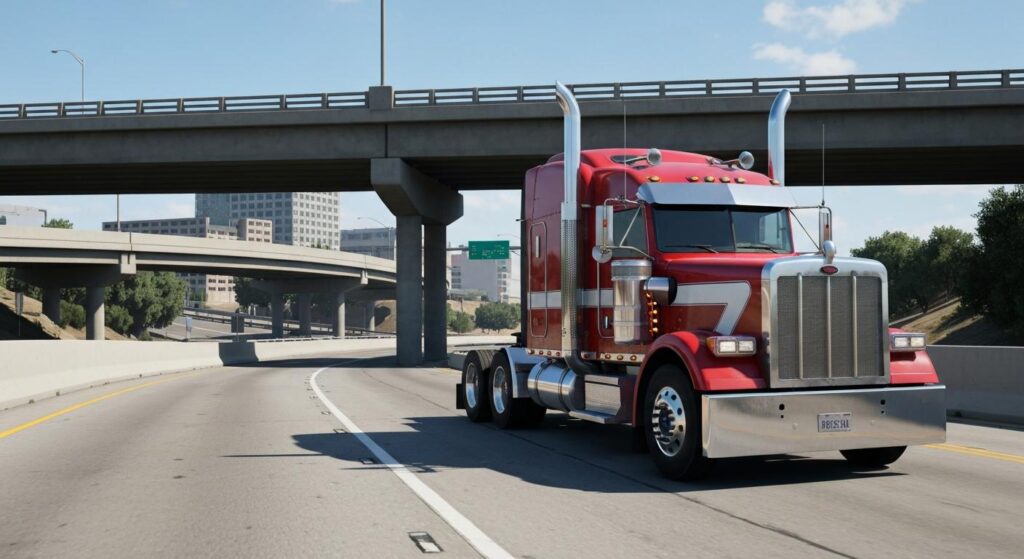
A devastating collision involving a commercial tractor-trailer on East Washington Boulevard in Los Angeles has left one person dead and another injured, shattering lives in an instant. According to initial reports from the Los Angeles Fire Department (LAFD), emergency crews responded to the crash around 7:27 p.m. on November 17, 2026, in the 2045 block of East Washington Boulevard. When a sudden tragedy like this strikes, surviving family members and injured victims are left facing unimaginable grief, mounting medical bills, and urgent questions about how such a preventable catastrophe occurred.
At the Law Offices of Samer Habbas & Associates, PC, we extend our deepest condolences to the loved ones of the individual lost in this crash and our sincere wishes for recovery to the person who was injured. We will guide you through the process and fight for you & your family to pursue accountability and full financial recovery. Under California Code of Civil Procedure (CCP) § 377.60, eligible surviving family members have the legal right to bring a wrongful death lawsuit when negligence causes a fatal collision, while injured survivors may pursue separate personal injury claims. Whether you need guidance from an experienced Culver City truck accident lawyer serving the greater Los Angeles basin or a dedicated Anaheim wrongful death lawyer representing families across Southern California, it is critical to understand your rights early—especially because California Code of Civil Procedure (CCP) § 335.1 generally limits wrongful death and injury lawsuits to two years, with far shorter deadlines if a public entity shares responsibility.
About the East Washington Boulevard Fatal Tractor-Trailer Crash in Los Angeles
According to breaking traffic coverage surfaced through Google News: Los Angeles crashes and local emergency dispatches citing the Los Angeles Fire Department, the fatal collision occurred at approximately 7:27 p.m. on November 17, 2026, in the 2045 block of East Washington Boulevard in Los Angeles. First responders arrived on scene to find a major crash involving a commercial tractor-trailer that claimed one life and left a second individual injured. Following LAFD’s emergency response and life-safety operations, fatal traffic collisions in this central Los Angeles corridor are typically investigated by the Los Angeles Police Department (LAPD) Central Traffic Division to determine the sequence of events, potential Vehicle Code violations, and contributing mechanical or environmental factors.
The 2045 block of East Washington Boulevard sits within a heavily trafficked commercial and industrial corridor just south of Downtown Los Angeles, near major freight arteries including Alameda Street, Santa Fe Avenue, and access ramps to the Interstate 10 (Santa Monica Freeway). Because warehouses, distribution hubs, and manufacturing facilities line this stretch of roadway, fully loaded 18-wheelers routinely share tight urban lanes with passenger cars, rideshare vehicles, delivery vans, cyclists, and pedestrians.
While investigators must complete a full reconstruction before issuing official findings, collisions involving tractor-trailers in dense Los Angeles commercial zones frequently stem from preventable acts of negligence, including:
- Commercial Driver Fatigue and Hours-of-Service Violations: Truck drivers facing tight freight schedules often push past federal rest limits set by the Federal Motor Carrier Safety Administration (FMCSA), slowing reaction times—especially during evening hours.
- Wide Turns and Blind-Spot (“No-Zone”) Errors: Tractor-trailers have massive blind spots along both sides, directly behind the trailer, and immediately in front of the cab. Failing to check mirrors or swinging wide across adjacent lanes when entering industrial driveways can trap smaller vehicles or vulnerable road users.
- Excessive Speed and Following Too Closely: A fully loaded tractor-trailer weighing up to 80,000 pounds requires dramatically longer stopping distances than a passenger vehicle. Driving too fast for evening traffic or urban intersection density makes sudden stops nearly impossible.
- Distracted or Impaired Driving: Looking at dispatch tablets, GPS units, or mobile phones—or operating a commercial rig while impaired—creates catastrophic hazards on city boulevards.
- Mechanical Failure and Deferred Maintenance: Worn brakes, underinflated tires, malfunctioning trailer lights, or defective coupling systems can cause a driver to lose control or make a trailer nearly invisible in low-light conditions.
From a legal standpoint, fatal truck crashes rarely involve only a single theory of liability. Beyond ordinary driver negligence, California law allows victims and families to pursue claims grounded in respondeat superior (holding the trucking company vicariously liable for an employee’s on-duty negligence), negligent hiring, training, or supervision, negligent vehicle maintenance, and negligence per se when a driver or motor carrier violates California traffic statutes or federal trucking safety regulations.
Why East Washington Boulevard Is So Dangerous for Motorists and Road Users
Urban freight corridors like East Washington Boulevard present a uniquely unforgiving environment when passenger vehicles and heavy commercial trucks converge after dark. At 7:27 p.m. in mid-November, full nighttime darkness has already settled over Los Angeles, compounding visibility challenges during the tail end of the evening rush hour. Along the 2045 block of East Washington Boulevard, motorists must contend with heavy semi-trucks merging in and out of industrial loading bays, frequent stop-and-go congestion near freeway interchanges, uneven pavement wear caused by heavy axle loads, and contrasting glare from oncoming headlights and commercial lot lighting.
The sheer physics of a tractor-trailer crash leave little margin for survival. According to data from the National Highway Traffic Safety Administration (NHTSA), collisions involving large trucks result in thousands of fatalities nationwide each year, and the overwhelming majority—roughly 70% or more—of those killed are occupants of passenger vehicles, pedestrians, or other road users rather than the truck driver. Because California serves as one of the busiest freight gateways in the United States, Los Angeles County consistently ranks among the most dangerous regions in the state for commercial vehicle crashes.
In addition to driver and trucking company error, roadway design and maintenance can play a critical role in serious evening collisions. Under California Government Code § 835, a public entity—such as the City of Los Angeles, Los Angeles County, or the California Department of Transportation (Caltrans)—may be held legally liable if a “dangerous condition of public property” created a reasonably foreseeable risk of the injury or death that occurred. Examples of dangerous public roadway conditions include:
- Inadequate or burned-out street lighting along a high-volume night freight corridor;
- Malfunctioning traffic signals or poorly timed intersection phases;
- Faded lane markings, missing turn-lane signage, or obscured sightlines near commercial driveways; and
- Hazardous road surface defects or unsafe lane geometry that fails to accommodate wide commercial turning radii.
To establish public entity liability under Government Code § 835, an injured survivor or grieving family must show that the property was in a dangerous condition at the time of the crash, that the condition proximately caused the injury or death, and that either a negligent act by a public employee created the hazard or the government agency had actual or constructive notice of the danger with enough time to correct it.
California Wrongful Death Law: What Families of Tractor-Trailer Accident Victims Can Recover
When a fatal truck crash occurs in California, the law provides two distinct but complementary civil legal remedies to address the full scope of the tragedy: a wrongful death claim and a survival action. Understanding how these two claims work together is essential to ensuring a family does not leave critical compensation on the table.
Wrongful Death Claims (California Code of Civil Procedure § 377.60)
A wrongful death lawsuit under CCP § 377.60 is filed by eligible surviving family members to compensate them directly for the personal and financial losses they suffer because their loved one’s life was cut short. Eligible claimants generally include the decedent’s surviving spouse or registered domestic partner, children, and the issue of deceased children—or, if none survive, other heirs entitled to inherit under California intestate succession laws, as well as certain financially dependent parents or stepchildren.
Recoverable damages in a California wrongful death action include:
- Economic Damages: Funeral and burial expenses, the financial support the deceased would have contributed to the household over their expected lifetime, the loss of gifts or benefits heirs could reasonably have expected to receive, and the reasonable value of household services the loved one provided.
- Non-Economic Damages: Compensation for the profound human loss suffered by survivors—specifically the loss of love, companionship, comfort, care, assistance, protection, affection, society, moral support, and (for surviving spouses) loss of consortium, as well as the loss of training and guidance for surviving children.
Survival Actions (California Code of Civil Procedure § 377.30)
By contrast, a survival action under CCP § 377.30 does not belong to the surviving family members individually; instead, it is brought on behalf of the deceased victim’s estate by the estate’s personal representative or successor in interest. A survival action seeks recovery for the damages the victim personally sustained between the moment of the collision and the moment of death—claims the victim would have been able to pursue had they survived.
Damages available in a California survival action may include:
- Emergency medical, ambulance, and hospital expenses incurred before death;
- Lost earnings suffered between the injury and passing;
- Property damage to the victim’s vehicle and personal belongings;
- Pre-death pain, suffering, and disfigurement as permitted under California survival action law (CCP § 377.34); and
- Punitive Damages: Critically, punitive damages—designed to punish egregious misconduct such as intoxicated commercial driving or deliberate falsification of safety records—are generally recoverable only through a survival action, not a standalone wrongful death claim.
Additionally, because LAFD reported that a second person was injured in the East Washington Boulevard crash, that survivor holds an independent California personal injury claim to pursue past and future medical expenses, lost wages, diminished earning capacity, and physical pain and emotional suffering.
Who Can Be Held Liable When a Victim Is Killed in a Tractor-Trailer Collision?
Commercial trucking accidents are fundamentally different from standard two-car fender-benders because multiple corporate, individual, and governmental actors often share responsibility for putting an unsafe tractor-trailer on Los Angeles streets. A thorough investigation looks far beyond the name on the police report to identify every liable party and every layer of insurance coverage.
The Other Driver, Motor Carrier, and Vehicle Owner
Liability often begins with the commercial truck driver who operated the rig negligently—whether through speeding, unsafe lane changes, failing to yield, distracted driving, or violating FMCSA safety rules. However, liability rarely stops at the cab door:
- The Trucking Company / Motor Carrier: Under California’s vicarious liability principles, an employer is responsible for the negligent acts of its driver committed within the scope of employment. Motor carriers can also be directly liable for pressuring drivers to violate hours-of-service limits, failing to screen unsafe drivers, or neglecting routine brake and tire inspections.
- Vehicle Owners Under California Vehicle Code § 17150: Even where a tractor or trailer is leased or independently owned, California Vehicle Code § 17150 imposes statutory liability on the owner of a motor vehicle for death or injury resulting from the negligent operation of that vehicle by anyone driving it with the owner’s express or implied permission.
- Freight Brokers, Shippers, and Cargo Loaders: If improperly balanced or unsecured freight shifted inside the trailer and contributed to a loss of control, third-party loading companies or shippers may also bear fault.
- DUI and Reckless Conduct: If toxicology testing or investigation reveals that a driver was impaired by alcohol, drugs, or controlled substances, or acted with conscious disregard for human safety, the victim’s estate or injured survivor may seek punitive damages in addition to compensatory recovery.
Government Entities — Road Defect Cases
If poor street lighting, a malfunctioning intersection signal, missing warning signs, or a hazardous roadway design along East Washington Boulevard contributed to the crash, a city, county, or state transportation agency may be held accountable under California Government Code § 835. Crucially, claims against public entities follow strict procedural rules: under California Government Code § 911.2, an administrative government tort claim must be filed within six (6) months of the date of the incident. Missing that six-month window can permanently forfeit the right to sue a public agency, regardless of how clear the roadway hazard may be.
Defective Products / Manufacturers
Sometimes a fatal tractor-trailer crash occurs—or causes far deadlier injuries than it should have—because a mechanical component failed. Under California strict product liability law, victims and families do not have to prove traditional negligence if a defect in design, manufacturing, or warning caused the harm. Potentially liable manufacturers and parts suppliers include makers of defective air brakes, tire blowouts caused by tread separation, faulty steering assemblies, defective trailer hitches, or inadequate rear and side underride guards that fail to prevent passenger vehicles from sliding beneath a trailer.
California’s Comparative Fault System
After a fatal commercial truck collision, insurance carriers for trucking companies routinely deploy defense investigators to the crash site within hours—often looking for any excuse to shift blame onto the deceased victim or injured motorist. They may argue that the smaller vehicle was traveling slightly over the speed limit, entered the truck’s blind spot, or failed to take evasive action in the dark.
Families need to know that California follows a pure comparative fault system. Under California’s pure comparative negligence rules, fault is apportioned by percentage among every party who contributed to the collision. Even if an investigation or jury concludes that a deceased or injured victim was partially responsible—whether 10%, 40%, or even more than 50% at fault—the victim or surviving family is not barred from recovering compensation. Instead, the total damages award is simply reduced in proportion to the victim’s assigned percentage of fault. For example, if a family’s total wrongful death damages are valued at $2,000,000 and the victim is found 20% at fault while the trucking company is 80% at fault, the family can still recover $1,600,000.
Because every single percentage point of blame directly impacts a family’s financial security, having an assertive legal team—such as our El Segundo truck accident lawyer team serving Los Angeles County and surrounding communities—to challenge biased defense reconstructions is vital.
Statute of Limitations: Don’t Wait to Protect Your Family’s Rights
While grieving a sudden loss or undergoing painful medical treatment, taking legal action may be the last thing on your mind. Unfortunately, California law enforces strict filing deadlines that can permanently extinguish your rights if missed:
- Standard Wrongful Death and Personal Injury Deadline (CCP § 335.1): In most fatal crash and injury cases against private drivers, trucking companies, or manufacturers, you have two (2) years from the date of death (for wrongful death) or the date of the collision (for personal injury) to file a lawsuit in civil court.
- Government Entity Claims (California Government Code § 911.2): If a public entity—such as the City of Los Angeles, a municipal utility, or Caltrans—contributed to the crash through a dangerous road condition or a government-owned vehicle, you must file a formal administrative claim within just six (6) months of the incident.
Equally urgent is the race to preserve perishable evidence. In commercial tractor-trailer cases, critical proof can vanish in days or weeks if no attorney intervenes:
- Electronic Control Module (ECM) & ELD Data: Modern semi-trucks record speed, braking, throttle position, and hours-of-service logs electronically, but onboard data can be overwritten when a rig returns to service or purged after short federal retention windows.
- Surveillance and Dashcam Footage: Warehouses, businesses, and traffic cameras along the 2045 block of East Washington Boulevard typically overwrite security video every 7 to 30 days.
- Physical Scene Evidence and Vehicle Inspection: Skid marks fade, debris is cleared, and damaged tractors or trailers are quickly repaired or salvaged unless formally preserved.
- Driver Qualification and Maintenance Records: Post-crash drug/alcohol test results, dispatch communications, and brake inspection logs must be locked down immediately before they are lost.
What Samer Habbas & Associates, PC Does When We Take a Wrongful Death Case
When you entrust your family’s case to the Law Offices of Samer Habbas & Associates, PC, we move immediately so you can focus on healing while we shoulder the legal battle. Our attorneys and investigative team take decisive, structured action from day one:
- Immediate Investigator Dispatch: We send experienced investigators to the East Washington Boulevard crash site to photograph lighting, lane geometry, skid marks, and sightlines, canvass nearby commercial businesses for security camera footage, and locate independent eyewitnesses.
- Formal Spoliation and Evidence Preservation Letters: We immediately serve legally binding preservation notices on the trucking company, vehicle owner, freight broker, and insurers demanding they preserve the tractor-trailer, ECM “black box” data, ELD logs, dashcam footage, dispatch texts, and maintenance histories.
- Top-Tier Accident Reconstruction and Trucking Safety Experts: We partner with forensic accident reconstructionists, commercial vehicle brake and mechanical specialists, and FMCSA compliance experts to prove exactly how the crash happened and defeat defense attempts to blame the victims.
- Full Insurance and Asset Identification: Commercial motor carriers frequently carry layered primary, excess, and umbrella liability policies. We uncover every available source of recovery and timely file any required government tort claims under Government Code § 911.2.
- Trial-Ready Representation: Insurance companies know which law firms settle cheap and which firms are prepared to take high-stakes cases to verdict. We build every wrongful death and catastrophic injury claim for the courtroom to maximize leverage during negotiations.
Our firm’s track record speaks to our commitment: Hundreds of Millions Recovered & Counting—with more than $380,000,000+ recovered for injured clients and grieving families across Southern California. Notable past results secured by Samer Habbas & Associates, PC include an $11,000,000 top single case result, a $4,007,015.24 settlement, a $3,450,000 settlement, a $2,675,000 settlement, and a $2,500,000 settlement, along with numerous multi-million-dollar recoveries. (Prior results do not guarantee a similar outcome in every case, as each matter depends on its unique facts and legal circumstances.) View our full case results.
Frequently Asked Questions — Fatal Tractor-Trailer Accidents in California
1. Who is legally allowed to file a wrongful death lawsuit in California?
Under California Code of Civil Procedure § 377.60, the primary individuals eligible to file a wrongful death claim are the deceased person’s surviving spouse, registered domestic partner, children, and the children of any predeceased children. If the victim had no surviving spouse or descendants, anyone who would be entitled to inherit the decedent’s property under California intestate succession laws—such as parents or siblings—may file. Financially dependent putative spouses, stepchildren, or parents may also qualify under specific statutory rules.
2. How long does our family have to file a claim after a fatal truck crash in Los Angeles?
In most wrongful death and personal injury cases in California, you have two years from the date of death or injury under CCP § 335.1. However, if a government entity (such as the City of Los Angeles or Caltrans) shares liability due to a dangerous road condition or a public vehicle, you must file an administrative claim within six months under California Government Code § 911.2. Because commercial trucking evidence can be destroyed rapidly, contacting an attorney within days—not months—is strongly recommended.
3. What if the trucking company’s insurer claims our loved one was partially at fault?
Do not assume your family has no case just because an insurance adjuster or preliminary report suggests shared fault. California uses a pure comparative fault standard, meaning a surviving family or injured person can still recover damages even if the victim was partially—or even mostly—at fault. Any financial recovery is simply reduced by the victim’s percentage of responsibility. An independent reconstruction often disproves premature assumptions made before black box data and video footage are reviewed.
4. What if another driver involved fled the scene or was uninsured?
Even if a third-party hit-and-run driver contributed to the crash or fled the scene, victims and families often still have strong avenues for recovery. First, investigators may uncover commercial negligence by the tractor-trailer driver or motor carrier who remained involved. Second, uninsured/underinsured motorist (UM/UIM) coverage on the victim’s own auto policy—or a household family member’s policy—can provide vital financial protection while LAPD investigators search for a fleeing motorist.
5. What is the difference between a wrongful death claim and a survival action?
A wrongful death claim (CCP § 377.60) compensates surviving family members for their own personal and financial losses resulting from the death, such as funeral costs, lost household financial support, and loss of love and companionship. A survival action (CCP § 377.30) is filed on behalf of the deceased’s estate to recover losses the victim personally suffered before passing away, including emergency medical bills, pre-death lost wages, eligible pre-death pain and suffering, and potential punitive damages in cases of extreme recklessness or malice.
6. How much does it cost to hire Samer Habbas & Associates, PC?
There are no upfront costs or out-of-pocket fees to hire our firm. Samer Habbas & Associates, PC handles wrongful death and tractor-trailer accident cases on a contingency fee basis—meaning you owe us nothing unless we successfully recover compensation for you and your family. Your initial case review is completely free and confidential.
7. Should I speak with the trucking company’s insurance adjuster or sign a release?
No. Commercial trucking insurers and rapid-response defense teams are trained to protect corporate profits—not your family. They may ask for a recorded statement or offer a quick, lowball settlement before you know the full extent of your losses or all liable parties. Politely decline to give a recorded statement or sign any medical authorizations or releases until you have spoken with an experienced California personal injury and wrongful death attorney.
Contact Samer Habbas & Associates, PC After a Fatal Tractor-Trailer Accident
Have You Suffered an Injury or Lost a Loved One in a Los Angeles Truck Accident?
You do not have to face powerful trucking companies and their insurers alone. At the Law Offices of Samer Habbas & Associates, PC, we will guide you through the process and fight for you & your family to pursue the maximum compensation you deserve. With $380,000,000+ recovered for Southern California clients, we bring proven courtroom strength and compassionate, client-first advocacy to every case.
24/7 Free Consultation • No Fee Unless We Win • Services Available in English, Spanish, and Arabic
GET HELP NOW — FREE CASE REVIEW:
Call Toll-Free 24/7: 888-848-5084
Irvine Primary Office: (949) 379-1424 (200 Spectrum Center Dr, Suite 1230, Irvine, CA 92618)
Anaheim Office: (714) 786-1404 | Additional Los Angeles Area Office in El Segundo
 North Hollywood Fatal Pedestrian Crash Leaves 3 Dead and Multiple Injured
 Free Consult
 Call 24/7