






Two Killed in Tragic Plane Crash at Montgomery-Gibbs Executive Airport in San Diego
California Aviation Wrongful Death and Liability Guide
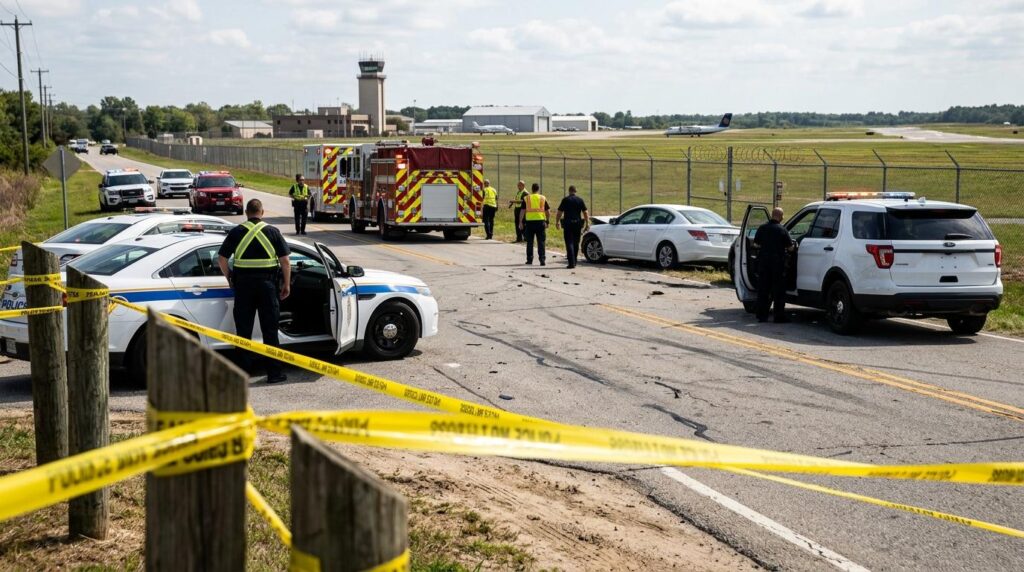
A heartbreaking aviation disaster unfolded in San Diego on September 7, 2026, when a private aircraft crashed at Montgomery-Gibbs Executive Airport, claiming the lives of two individuals on board. When an unexpected tragedy occurs at a regional airfield, surviving families are left to confront devastating emotional shock, profound grief, and countless unanswered questions regarding how and why the flight ended in catastrophe. Have you suffered an injury from an accident or lost a beloved family member in an aviation or transportation disaster? At the Law Offices of Samer Habbas & Associates, PC, we lead with heartfelt compassion for victims and their loved ones. We understand that during times of overwhelming loss, families need more than sympathy—they need an unwavering legal advocate. We will guide you through the process and fight for you & your family to uncover the truth, demand accountability from every responsible party, and secure the full compensation you deserve.
Aviation accidents involve layered webs of federal aviation regulations, multi-agency governmental inquiries, and complex California liability laws. If your loved one was killed in an aircraft crash, your family may be entitled to pursue justice under California Code of Civil Procedure (CCP) § 377.60, the state’s wrongful death statute. However, time to assert these vital legal protections is strictly governed by California Code of Civil Procedure (CCP) § 335.1, which establishes a two-year statute of limitations for personal injury and wrongful death actions against private entities. Furthermore, as our experienced Anaheim wrongful death lawyer team frequently emphasizes to grieving families across Southern California, claims involving municipal airfield maintenance or governmental air traffic control impose drastically shorter administrative deadlines. Understanding your family’s rights immediately following an airfield catastrophe is the crucial first step toward protecting your future.
About the San Diego Fatal Montgomery-Gibbs Executive Airport Plane Crash
According to initial reporting from Google News and the Los Angeles Times, emergency dispatchers received urgent calls reporting a catastrophic aircraft accident at Montgomery-Gibbs Executive Airport (MYF), located in the Kearny Mesa neighborhood of central San Diego. San Diego Fire-Rescue personnel and local law enforcement responded to the corporate airfield, where they confirmed that two occupants tragically suffered fatal injuries at the scene. Federal oversight agencies, spearheaded by the National Transportation Safety Board (NTSB) alongside the Federal Aviation Administration (FAA), immediately initiated comprehensive field investigations to determine the sequence of events that led to the fatal crash.
Montgomery-Gibbs Executive Airport is one of the most active corporate and general aviation hubs in Southern California. The airfield features multiple intersecting paved runways—including primary runways 10L/28R and 10R/28L, and crosswind runway 5/23—accommodating private executive jets, turboprops, single-engine aircraft, flight training academies, and helicopter transit operations. Unlike scheduled commercial airline flights departing from major international terminals, general aviation and corporate airfield flights operate in dynamic, fast-paced environments where small mechanical anomalies, micro-weather shifts, or split-second communication failures can have catastrophic outcomes.
Aviation investigations require extensive forensic analysis to determine whether the crash was caused by:
- Mechanical Breakdown or Structural Failure: Catastrophic engine failure during critical phases of flight (such as takeoff climb-out or final landing approach), loss of control surface responsiveness, or in-flight electrical and instrument blackouts.
- Maintenance and Inspection Negligence: Inadequate mechanical overhauls, failure to comply with FAA Airworthiness Directives (ADs), unaddressed metal fatigue, or negligent servicing by fixed-base operators (FBOs) and certified aircraft repair stations.
- Pilot Error or Spatial Disorientation: Loss of situational awareness, improper weight and balance calculations, aerodynamic stalls, or failure to execute proper emergency checklist protocols.
- Air Traffic Control and Ground Communications: Misguided runway assignments, conflicting flight vectoring, delayed wake-turbulence warnings, or failure to clear runway obstructions.
- Fuel Supply Issues: Fuel starvation, fuel exhaustion, or fuel contamination introduced during ground refueling operations.
From a legal perspective, fatal plane crashes demand immediate scrutiny under multiple legal theories of liability. These include common law negligence, negligence per se for regulatory violations of Title 14 of the Code of Federal Regulations (Federal Aviation Regulations), vicarious liability for corporate employers, common carrier duties if the aircraft was providing chartered passenger transport, and strict product liability against aircraft and component part manufacturers.
Why Montgomery-Gibbs Executive Airport and Corporate Flight Operations Can Be Hazardous
While aviation is statistically recognized as one of the safest modes of transportation, general aviation and corporate airfield operations carry unique risks that do not exist in commercial airline transit. Montgomery-Gibbs Executive Airport operates within intensely congested urban airspace. Situated directly beneath the busy Class B airspace shelf of San Diego International Airport (SAN) and immediately south of Marine Corps Air Station Miramar, pilots operating out of Montgomery-Gibbs must navigate complex, crowded arrival and departure corridors with virtually zero margin for error.
With hundreds of daily flight operations encompassing beginner student pilots, private aviators, charter operators, and air ambulance services, Montgomery-Gibbs presents a wide variance in pilot experience and cockpit avionics. According to data published by the NTSB and the FAA, general aviation fatal accident rates are significantly higher than those of commercial air carriers. Statistics indicate that approximately 60% of all fatal general aviation accidents occur during the takeoff and initial climb phases or during the approach and landing sequences—phases of flight where pilots operate at low altitudes and low airspeed, leaving minimal time to recover if an engine fails or an aerodynamic stall develops.
In addition to pilot and mechanical hazards, the physical condition of the airport itself can create catastrophic risks. Montgomery-Gibbs Executive Airport is owned and operated by the City of San Diego. Under California law, municipal airport operators owe a legal duty to maintain runways, taxiways, safety zones, and navigation aids in a reasonably safe condition. When an accident is precipitated or worsened by hazardous tarmac conditions—such as degraded runway surfaces, obscured edge lighting, inadequate runway safety areas, or failure to eliminate foreign object debris (FOD)—the public entity can be held legally accountable under California Government Code § 835 for maintaining a dangerous condition of public property. Whether an accident occurs in the air, on the tarmac, or during ground transit via an airport transportation vehicle, establishing legal responsibility requires an immediate, forensic investigation of both the aircraft and the airfield environment.
California Wrongful Death Law: What Families of Plane Crash Victims Can Recover
Following a fatal plane crash in California, surviving family members often experience severe financial hardship alongside profound emotional trauma. California civil jurisprudence provides two distinct legal pathways to pursue civil justice: a wrongful death claim and a survival action. Understanding the vital legal boundaries between these two claims is essential for ensuring that all recoverable damages are pursued.
1. California Wrongful Death Claims (CCP § 377.60)
A wrongful death claim is designed to compensate statutory heirs for the personal, relational, and financial injuries they endure as a direct consequence of their loved one’s untimely passing. Under California Code of Civil Procedure § 377.60, the individuals entitled to initiate this action include the decedent’s surviving spouse, registered domestic partner, children, or, if none exist, the heirs entitled to the decedent’s property through intestate succession (such as parents or siblings). The damages recoverable under CCP § 377.60 focus squarely on the losses suffered by the living family members, including:
- Financial Support: The financial contributions, income, and benefits the deceased loved one reasonably would have provided to the household over their expected working lifetime.
- Loss of Consortium, Companionship, and Guidance: The tangible value of the love, companionship, comfort, care, assistance, protection, affection, society, and moral training the deceased person provided to their spouse, partner, and children.
- Funeral and Burial Costs: Direct reimbursement for reasonable funeral, cremation, or burial expenses incurred by the family.
- Household Services: The monetary value of domestic support, childcare, home maintenance, and administrative management the deceased performed for the family.
2. California Survival Actions (CCP § 377.30 & CCP § 377.34)
Unlike a wrongful death claim, a survival action is brought on behalf of the deceased victim’s estate by their designated personal representative or successor in interest under California Code of Civil Procedure § 377.30. A survival action seeks recovery for the economic and non-economic losses that the victim personally suffered prior to death. Recoverable damages under CCP § 377.30 and CCP § 377.34 include:
- Pre-Death Medical Care: Any emergency medical treatment, hospitalization, or surgical costs incurred between the accident and the time of death.
- Pre-Death Lost Wages and Property Damage: Income lost prior to death, as well as the destruction of personal property carried aboard the aircraft.
- Pre-Death Pain, Suffering, and Emotional Distress: Under California Code of Civil Procedure § 377.34 (amended pursuant to California Senate Bill 447), the estate may now seek compensation for the physical pain, suffering, disfigurement, and acute pre-impact emotional terror experienced by the victim between the initial onset of the in-flight emergency and their fatal impact.
- Punitive Damages: If the conduct of the aircraft owner, corporate operator, or maintenance provider demonstrated malice, oppression, or conscious disregard for human safety (such as falsifying maintenance logs or knowingly flying with known catastrophic defects), California law allows the estate to pursue punitive damages to punish the wrongdoer.
Who Can Be Held Liable When an Aviation Victim Is Killed?
Determining legal accountability in an aviation crash requires looking beyond initial media reports to identify every entity whose negligence contributed to the catastrophe. Multiple parties can share liability under California law:
The Pilot, Aircraft Operator, and Corporate Owner
Pilots are held to exacting standards of care. When an aviator fails to conduct proper pre-flight inspections, operates into known adverse weather conditions beyond their flight certification, ignores air traffic control instructions, or mismanages fuel systems, they and their estate can be held liable for resulting deaths. Furthermore, if the aircraft was operated on behalf of a business, charter company, or corporate flight department, the owner or employer is vicariously liable under the doctrine of respondeat superior for the negligent acts of their pilots and crew. Additionally, California principles of negligent entrustment hold aircraft owners accountable if they permitted an inexperienced, improperly certified, or medically compromised pilot to operate the aircraft.
Government Entities — Airfield Conditions and Air Traffic Control
Municipalities that operate public airfields, such as the City of San Diego at Montgomery-Gibbs Executive Airport, have a binding legal duty to maintain their infrastructure safely. Under California Government Code § 835, a public entity may be held liable if a dangerous condition on its property created a substantial risk of injury when used with due care. For example, if defective runway lighting, misleading runway paint markings, severe pavement drop-offs, or unmitigated wildlife hazards on the airfield contributed to a crash, the municipal operator can be held responsible. However, claims against public entities are subject to the California Government Claims Act under California Government Code § 911.2, which mandates filing a formal administrative claim within a strict six-month deadline. Furthermore, if federal air traffic controllers (employed by the FAA) provided erroneous vectoring, failed to maintain required aircraft separation, or issued improper landing clearances, claims must be asserted against the United States government under the Federal Tort Claims Act (FTCA).
Defective Products, Aircraft Manufacturers, and Maintenance Facilities
Aviation accidents frequently stem from hidden mechanical failures that even skilled pilots cannot overcome. Under California’s strict product liability laws, manufacturers of aircraft frames, engines, propellers, avionics, and flight-control systems are held strictly liable if a design defect, manufacturing flaw, or inadequate warning caused the disaster. In such cases, the plaintiff does not need to prove negligence—only that the product was defective and directly caused the fatal crash. Additionally, third-party maintenance, repair, and overhaul (MRO) facilities and certified mechanics who performed improper inspections, installed counterfeit parts, or failed to identify structural cracking during annual inspections can be held directly liable for professional negligence.
California’s Pure Comparative Fault System
Insurance companies and defense counsel in aviation litigation routinely attempt to minimize their financial exposure by claiming the victims or operators contributed to the accident. In many states, being partially at fault bars a family from recovering any compensation. However, California operates under a pure comparative fault legal doctrine, firmly established in the landmark California Supreme Court decision Li v. Yellow Cab Co.
Under pure comparative fault, liability is apportioned among all responsible entities based on their exact percentage of fault. If a victim or party is found to be partially responsible for an incident, their financial recovery is simply reduced in direct proportion to their percentage of fault. For example, if a jury determines that total damages equal $5,000,000 and finds that a defendant was 80% at fault while another factor accounted for 20%, the plaintiff is still entitled to recover 80% ($4,000,000) from the negligent defendant. More importantly, for innocent passengers aboard an aircraft, comparative fault is virtually zero percent. Surviving families of passengers are entitled to seek 100% of their lawful economic damages from any and all negligent defendants under California joint and several liability rules.
Statute of Limitations: Don’t Wait to Protect Your Family’s Rights
The aftermath of an aviation tragedy is a period of overwhelming emotional shock. Nevertheless, surviving families must be aware of California’s strict legal deadlines. Failing to file a lawsuit or administrative claim within the statutory timeframe permanently extinguishes your legal right to hold wrongdoers accountable.
- Standard Two-Year Deadline (CCP § 335.1): Under California Code of Civil Procedure § 335.1, surviving families have exactly two (2) years from the date of the victim’s death to file a wrongful death or survival lawsuit against private individuals, aircraft operators, maintenance facilities, and manufacturers.
- Crucial Six-Month Government Claim Deadline (Gov Code § 911.2): If any part of your claim involves a public entity—such as the City of San Diego, San Diego County, or any public airfield authority—California Government Code § 911.2 requires you to present a formal written claim to the governmental body within just six (6) months of the date of the incident. Missing this six-month deadline almost always bars you from ever pursuing compensation against that government entity.
- Federal Tort Claims Act (FTCA) Deadlines: Claims involving negligence by FAA air traffic controllers require administrative filing on Form SF-95 within two (2) years of accrual, followed by strict federal court filing deadlines if the claim is denied.
Beyond statutory deadlines, early legal intervention is critical for evidence preservation. Following a plane crash, physical wreckage is rapidly removed from the airfield and impounded by federal authorities. On-board flight data recorders, avionics memory chips, Garmin GPS units, airframe maintenance logs, and air traffic control audio recordings must be formally preserved. Without immediate legal representation issuing formal spoliation letters to operators, flight schools, and insurers, critical evidence can be lost, discarded, or overwritten.
What Samer Habbas & Associates, PC Does When We Take a Wrongful Death Case
Litigating an aviation disaster against corporate aircraft owners, international aerospace manufacturers, and government entities requires extensive financial resources, legal sophistication, and meticulous preparation. When the Law Offices of Samer Habbas & Associates, PC accepts a wrongful death case, our entire legal team mobilizes immediately to shoulder the burden for the grieving family:
- Immediate Evidence Preservation: We issue comprehensive formal spoliation demands to aircraft owners, corporate operators, maintenance facilities, and local authorities, ensuring that flight telemetry, radio tapes, radar data, fuel logs, and maintenance records are legally preserved.
- Deploying Top Aviation Experts: We retain elite independent aviation accident investigators, former NTSB investigators, licensed aeronautical engineers, metallurgists, and piloting standard-of-care experts to reconstruct the flight profile and uncover the root causes of the crash.
- Navigating Federal Inquiries: While the NTSB conducts its parallel investigation to determine probable cause, our attorneys independently gather facts to build an unassailable civil case for liability and damages.
- Establishing Comprehensive Estate Administration: We assist families in opening probate estates and securing the appointment of personal representatives under California law to ensure both CCP § 377.60 wrongful death and CCP § 377.30 survival claims are properly positioned.
- Documenting Full Economic and Emotional Impact: We collaborate with forensic economists, vocational experts, and grief counselors to illustrate the comprehensive lifetime financial loss and emotional trauma your family has endured.
Our law firm has stood beside injured victims and grieving families for over two decades. We have built an authoritative reputation as aggressive, results-driven advocates who refuse to back down against major corporate defendants and their insurance carriers. Our track record reflects our relentless commitment to justice:
- $380,000,000+ Total Recovered: Hundreds of millions recovered and counting for our clients across Southern California.
- $11,000,000: Top single case recovery obtained for a catastrophically injured client.
- $4,007,015.24: Notable complex personal injury and wrongful death recovery.
- $3,450,000: Notable recovery in a devastating catastrophic injury case.
- $2,675,000 & $2,500,000: High-value settlements securing long-term financial stability for affected families.
- $2,000,000 & $1,700,000: Multi-million dollar settlements holding negligent parties accountable.
View our full case results and multi-million dollar recoveries.
Frequently Asked Questions — Fatal Aviation Accidents in California
Who has the legal right to file a wrongful death lawsuit after a fatal plane crash in California?
Under California Code of Civil Procedure § 377.60, the primary right to file a wrongful death lawsuit belongs to the deceased victim’s surviving spouse, registered domestic partner, and surviving children. If the deceased had no spouse or children, the claim may be filed by their parents, siblings, or next of kin under California intestate succession laws. Additionally, any individual who was financially dependent on the deceased (such as a putative spouse or stepchildren) may also have standing to assert claims.
How long do we have to file a claim following a fatal airfield crash in San Diego?
Under California Code of Civil Procedure § 335.1, families generally have two (2) years from the date of their loved one’s passing to initiate a wrongful death lawsuit against private entities such as aircraft operators, pilots, or manufacturers. However, if the claim involves dangerous conditions at a public airport (such as Montgomery-Gibbs Executive Airport, owned by the City of San Diego), you must file a formal administrative claim under California Government Code § 911.2 within just six (6) months. Due to these short deadlines, you should consult an attorney immediately.
What is the difference between a wrongful death claim and a survival action?
A California wrongful death claim (CCP § 377.60) belongs directly to the surviving family members and compensates them for the financial support, household services, companionship, and love they lost because of their family member’s death. A survival action (CCP § 377.30 and § 377.34) is brought by the decedent’s estate to recover damages the victim suffered prior to passing, including pre-death medical expenses, property loss, and pre-impact pain, suffering, and fright endured during the flight emergency.
Can our family recover compensation if the aircraft was privately owned or rented?
Yes. Private aircraft owners, corporate flight departments, and flying clubs carry aviation liability insurance policies designed to cover passenger fatalities and third-party injuries. Furthermore, under California law and general aviation liability principles, owners can be held legally accountable for negligent entrustment, poor maintenance oversight, or vicariously responsible for the actions of authorized flight crews.
What if the crash was caused by an aircraft part defect or mechanical failure?
If an investigation demonstrates that the crash occurred because of a defective component, such as an engine stall, failed fuel pump, or faulty flight instrument, our firm can file a strict product liability lawsuit against the manufacturer. Under California strict product liability law, manufacturers are held liable if their product contained a design defect, manufacturing flaw, or failed to provide adequate safety warnings, regardless of whether they exercised ordinary care.
How much does it cost to hire the Law Offices of Samer Habbas & Associates, PC?
We handle all catastrophic injury and wrongful death cases on a contingency fee basis under our Zero-Fee Guarantee. You pay nothing out of pocket, and there are no upfront legal fees. We advance all costs required to retain top aviation investigators, reconstruct the crash, and litigate the case. If we do not successfully recover financial compensation for your family, you owe us nothing in attorney fees.
Should our family speak to the aircraft operator’s or airport’s insurance adjusters?
No. Following an aviation catastrophe, insurance adjusters and risk management representatives often contact grieving families quickly. Their objective is to protect their company’s bottom line, minimize payouts, or secure recorded statements that can be used against you later. You are under no legal obligation to speak with defense adjusters or sign early settlement releases. Direct all communications to an experienced attorney who can protect your rights and ensure you receive the full compensation you are entitled to under California law.
Contact Samer Habbas & Associates, PC After a Fatal Plane Crash Accident
Compassionate Guidance. Aggressive Advocacy. Hundreds of Millions Recovered.
If your family has been devastated by the fatal plane crash at Montgomery-Gibbs Executive Airport or any aviation disaster in California, you do not have to carry this heavy burden alone. The Law Offices of Samer Habbas & Associates, PC is prepared to launch an immediate, thorough investigation to hold all negligent parties accountable.
Why Choose Samer Habbas & Associates, PC?
- Over $380,000,000 Recovered for injured victims and grieving families across Southern California.
- Zero Upfront Costs: We work on a contingency fee basis—No Fee Unless We Win.
- Available 24 Hours a Day, 7 Days a Week for immediate, confidential consultations.
- Multilingual Legal Support: Services provided in English, Spanish, and Arabic.
Call Our Dedicated Legal Team Toll-Free Today: 888-848-5084
FREE CASE REVIEW — GET HELP NOW
Southern California Office Locations to Serve You:
Primary Office (Irvine): 200 Spectrum Center Dr, Suite 1230, Irvine, CA 92618 | Phone: (949) 379-1424
Anaheim Office: 2099 S State College Blvd, Suite 460, Anaheim, CA 92806 | Phone: (714) 786-1404
El Segundo Office: 1730 E Holly Ave, Suite 752, El Segundo, CA 90245
Website: https://www.habbaspilaw.com | Email: info@habbaspilaw.com
 One Person Killed, Four Injured in Tesla Car Accident at Beverly Grove Parking Lot
  Free Consult
 Call 24/7