









Phoenix
Aviation Accident Lawyer
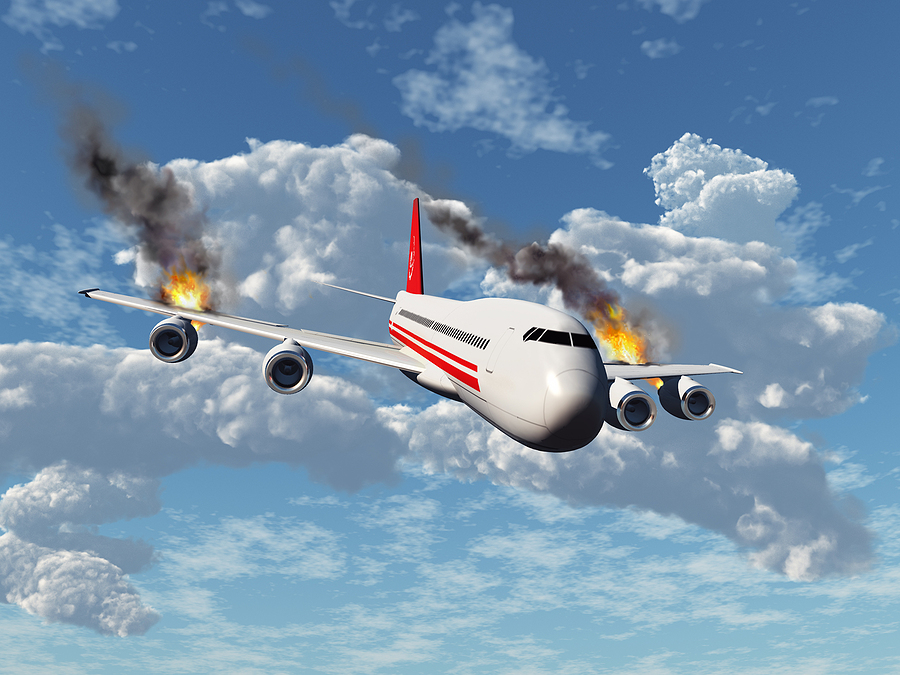
When an aircraft loses control, suffers a mechanical failure, or makes a violent emergency landing in the Phoenix area, the consequences are often catastrophic and immediate. Aviation accidents involve forces, risks, and investigations that simply do not exist in other injury cases, and victims are often left facing life-altering injuries while airlines, operators, and insurers move quickly to protect their interests. These cases demand swift action and a deep understanding of how aviation incidents unfold. Below, Law Offices of Samer Habbas & Associates explains essential information about aviation accident cases, including common causes, who may be held responsible, the legal options available to injured victims and families, the types of financial compensation that may be pursued, and how a Phoenix aviation accident lawyer can take on powerful defendants and fight for accountability and justice on your behalf.
Aviation Accident Lawyer in Phoenix
If you were harmed in an aviation accident, time matters. Get clear answers about your rights and next steps by speaking with a Phoenix personal injury lawyer who handles serious aviation cases. Call (888) 848-5084 or contact Law Offices of Samer Habbas & Associates online to schedule a free, confidential consultation.
Types of Aviation Accidents That Happen in Phoenix, Arizona
- Commercial Airline Accidents — These airline accidents involve large passenger aircraft arriving at or departing from Phoenix Sky Harbor International Airport. You may be injured due to hard landings, runway overruns, in-flight mechanical failures, turbulence-related injuries, or rare but catastrophic crashes affecting many passengers at once.
- Private Plane Accidents — Small aircraft crashes often involve single-engine or multi-engine planes used for personal travel, business trips, or flight training around Phoenix. These accidents frequently occur during takeoff or landing and can leave you dealing with severe injuries even when the aircraft is carrying only a few people.
- Helicopter Accidents — Rotorcraft accidents may involve medical transport helicopters, news helicopters, or tour flights operating over Phoenix. Low-altitude flying, sudden mechanical failures, or loss of control can place you at serious risk, especially in densely populated areas.
- Charter and Air Taxi Accidents — On-demand charter flights and air taxi services operate throughout the Phoenix area, including Phoenix-Mesa Gateway Airport. When safety standards are rushed or corners are cut, you may suffer injuries similar to those in commercial airline crashes, but with fewer passengers and less public scrutiny.
- Military Aircraft Accidents — Phoenix airspace includes activity near Luke Air Force Base, where military training flights are common. When military aircraft are involved in a crash or collision, the consequences can be devastating.
- Airport Ground Accidents — Not all aviation accidents happen in the air. You can be injured while an aircraft is taxiing, during boarding or deplaning, or due to jet blast, propeller strikes, or collisions with fuel trucks and other ground equipment at Phoenix airports.
- Midair Collisions and Near-Miss Accidents — Crowded Phoenix airspace increases the risk of aircraft colliding midair or narrowly avoiding each other. These events may involve private planes, helicopters, or training aircraft and can result in loss of control, emergency landings, or fatal crashes.
- Emergency Landings and Crash Landings — Pilots sometimes attempt emergency landings in desert areas, roadways, or open land surrounding Phoenix. Even when an emergency landing avoids a full explosion, you may still suffer serious injuries due to impact forces and aircraft damage.
Common Injuries You Can Suffer in a Phoenix Aviation Accident
- Traumatic Brain Injuries — A sudden impact, violent turbulence, or debris inside the aircraft can cause head injuries that affect your memory, concentration, and ability to function, even if there are no visible signs of trauma.
- Spinal Cord and Neck Injuries — Extreme forces during a crash or hard landing may damage your spine or neck, leading to chronic pain, limited mobility, or permanent paralysis that changes every aspect of your daily life.
- Burn and Fire-Related Injuries — Aviation accidents often involve fuel ignition, exposing you to severe burns, smoke inhalation, or chemical exposure that can require long-term medical treatment and reconstructive care.
- Internal Organ Damage — Blunt force trauma can injure organs such as the lungs, liver, or spleen, creating life-threatening conditions that are not always immediately obvious after an aviation accident.
- Multiple Fractures and Crush Injuries — Collapsing aircraft structures and unsecured objects may cause complex bone fractures or crushing injuries that require surgery, rehabilitation, and extended recovery periods.
- Fatal Injuries and Loss of Life — Some aviation accidents in Phoenix result in death, leaving families facing emotional trauma and sudden financial loss.
Where Aviation Accidents Commonly Occur in Phoenix, Arizona
- Phoenix Sky Harbor International Airport — As one of the busiest airports in the country, Sky Harbor sees constant commercial airline traffic. Accidents are more likely to occur on runways, taxiways, and approach paths over nearby neighborhoods like Tempe, Downtown Phoenix, and South Mountain.
- Deer Valley Airport — Located in North Phoenix, Deer Valley Airport handles a high volume of private planes, flight training aircraft, and business aviation. Frequent takeoffs and landings increase the risk of crashes, midair incidents, and runway accidents in surrounding residential areas.
- Phoenix-Mesa Gateway Airport — Serving the East Valley, Phoenix-Mesa Gateway Airport supports commercial, charter, and military-related flights. Aviation accidents here may occur during takeoff, landing, or ground operations and can impact nearby communities in Mesa, Gilbert, and Apache Junction.
- Luke Air Force Base Airspace — Military training flights regularly pass through airspace west of Phoenix near Glendale, Goodyear, and Litchfield Park. When military aircraft are involved in an accident, the crash site may be in remote desert areas or near growing suburban developments.
- Urban Neighborhoods Under Flight Paths — Many Phoenix neighborhoods sit directly beneath flight paths used by commercial and private aircraft. Accidents may occur over areas such as Ahwatukee, Arcadia, and North Scottsdale when aircraft experience mechanical trouble or loss of control.
- Desert and Open Land Surrounding Phoenix — Emergency landings and crash landings often happen in the Sonoran Desert surrounding the city. These remote locations can delay rescue efforts and medical care, increasing the severity of injuries suffered during an aviation accident.
- Helicopter Operating Areas — Medical helicopters, news helicopters, and law enforcement aircraft frequently operate at low altitudes throughout Phoenix. Accidents involving helicopters may occur near hospitals, highways, construction zones, or densely populated areas, putting both passengers and people on the ground at risk.
Who Can Be Held Responsible After a Phoenix Aviation Accident
- Airlines and Aircraft Operators — If you were injured on a commercial flight, the airline or operator may be responsible for safety failures. These companies are regulated under federal law, including 49 U.S.C. § 44701 and the Federal Aviation Regulations, most notably 14 C.F.R. Part 121 for commercial airlines and 14 C.F.R. Part 91 for general flight operations.
- Charter and Air Taxi Operators — Many Phoenix-area flights are charter or on-demand services. These operators must follow 14 C.F.R. Part 135, along with Part 91. When training, maintenance, or safety procedures are ignored, the operator may be held liable for your injuries.
- Pilots and Flight Crew — When an aviation accident is caused by pilot error, fatigue, or poor decision-making, responsibility may fall on the pilot or flight crew. Pilot certification is governed by 14 C.F.R. Part 61, and flight conduct is regulated under 14 C.F.R. Part 91. Employers are often legally responsible for on-duty crew actions.
- Aircraft and Parts Manufacturers — If a defective aircraft or component caused the accident, you may have a product liability claim under A.R.S. §§ 12-681 through 12-689. Some claims may also be limited by the General Aviation Revitalization Act of 1994, which can restrict certain manufacturer claims involving older aircraft or parts.
- Maintenance and Repair Providers — Aircraft maintenance is regulated by 14 C.F.R. Part 43, and many maintenance businesses operate under 14 C.F.R. Part 145. Improper repairs, skipped inspections, or falsified records can make maintenance providers liable for an aviation accident.
- Air Traffic Control and Government Agencies — If air traffic control errors contributed to your injuries, claims may be brought under the Federal Tort Claims Act, 28 U.S.C. §§ 1346(b) and 2671–2680, which imposes specific procedures and deadlines.
- Airport Owners and Ground Operators — Airports and ground service companies may be responsible when unsafe runways, poor lighting, fueling mistakes, jet blast, or ground equipment cause injury.
- Deadlines That Apply to Phoenix Aviation Accident Claims — Most Arizona aviation injury and wrongful death claims must be filed within two years under A.R.S. § 12-542, with wrongful death claims authorized by A.R.S. §§ 12-611 and 12-612. Claims involving Arizona public entities require a Notice of Claim within 180 days under A.R.S. § 12-821.01, and lawsuits are generally limited to one year under A.R.S. § 12-821. Federal aviation claims require an administrative filing within two years under the Federal Tort Claims Act.
State, Federal, and International Aviation Laws
Aviation accident cases are governed by a complex combination of state, federal, and sometimes international laws. Most aviation safety standards in the United States are regulated at the federal level by the Federal Aviation Administration (FAA) under Title 49 of the United States Code and the Federal Aviation Regulations found in 14 C.F.R. Parts 1 through 199. These rules control pilot certification, aircraft maintenance, flight operations, air traffic control procedures, and airline safety requirements. Federal law often preempts certain state regulations, making aviation litigation more complex than ordinary injury cases.
Arizona state law also plays a role in aviation accident claims, particularly in personal injury and wrongful death lawsuits filed under A.R.S. §§ 12-542, 12-611, and 12-612. When an aviation accident involves a government agency, such as air traffic control, claims may fall under the Federal Tort Claims Act, 28 U.S.C. §§ 1346(b) and 2671–2680, which requires strict administrative procedures before filing suit.
In cases involving international flights, foreign carriers, or accidents occurring outside the United States, the Montreal Convention may apply. This international treaty governs liability and damages for many commercial airline accidents involving international travel. Because aviation accidents can trigger overlapping legal systems, having a Phoenix aviation accident lawyer who understands how state, federal, and international aviation laws interact is critical to protecting your claim.
How a Phoenix Airplane Accident Lawyer Helps You After a Crash
- Investigating Aviation Accidents in the Phoenix Area — You need a lawyer who understands Phoenix airspace, local airports, and regional flight patterns. Your lawyer works with aviation experts to review flight data, maintenance records, FAA reports, and conditions specific to Sky Harbor, Deer Valley, and Phoenix-Mesa Gateway.
- Working With Federal Investigations and Local Agencies — Aviation accidents are often investigated by federal agencies, but local emergency response, airport authorities, and Arizona medical providers also play a role. Your Phoenix airplane accident attorney coordinates with these entities to preserve evidence and protect your interests from the start.
- Handling Aviation Insurance Claims — Aviation insurance policies are complex and often involve very high policy limits. Your Phoenix aviation accident lawyer deals directly with airline, charter, and aircraft insurers, so you are not pressured into a quick or unfair settlement.
- Filing Aviation Accident Lawsuits in Arizona and Federal Courts — Depending on where and how the crash occurred, your case may be filed in Arizona state court or federal court in Arizona. Your lawyer handles venue decisions, pleadings, and aviation-specific legal requirements.
- Pursuing Full Compensation for Aviation Accident Losses — Your lawyer fights for damages unique to aviation accidents, including catastrophic medical costs, long-term care, lost earning capacity, pain and suffering, and wrongful death damages for surviving family members.
- Why Aviation Accident Cases Are Not Like Other Injury Cases — Aviation cases involve federal rules, technical evidence, multiple responsible parties, and powerful insurers. A Phoenix aviation accident lawyer understands how these cases work locally and knows how to move quickly to protect your rights.
What Damages Can Be Recovered After an Aviation Collision?
Aviation collisions often result in catastrophic injuries or fatalities, leading to significant financial and personal losses. Depending on the circumstances of your case, you may be entitled to recover compensation for:
- Emergency Medical Treatment and Hospitalization — Including trauma care, surgeries, ICU stays, and specialized burn or neurological treatment.
- Long-Term Medical Care and Rehabilitation — Ongoing therapy, reconstructive procedures, assistive devices, and in-home medical support.
- Lost Income and Loss of Earning Capacity — Compensation for missed work and reduced ability to earn in the future due to permanent injuries.
- Pain and Suffering — Physical pain, emotional trauma, anxiety, PTSD, and reduced quality of life following a catastrophic aviation accident.
- Disfigurement and Permanent Disability — Compensation for lasting physical impairments or visible scarring.
- Property Losses — Personal belongings damaged or destroyed in the aviation collision.
- Wrongful Death Damages — If a loved one was killed, surviving family members may pursue funeral expenses, loss of financial support, and loss of companionship under Arizona law.
Because aviation collisions often involve high insurance policy limits and multiple responsible parties, a Phoenix aviation accident lawyer carefully evaluates both immediate and future damages to pursue full and fair compensation.
Contact Experienced Phoenix Airplane Accident Lawyer Samer Habbas

When an aircraft goes down, makes a violent emergency landing, or fails during takeoff or landing in the Phoenix area, the damage is immediate and often devastating. Aviation accidents are unlike any other type of injury case, involving complex investigations and powerful companies that move fast to protect themselves. The experienced Phoenix aviation accident attorneys at Law Offices of Samer Habbas & Associates have handled serious, high-stakes cases and understand what it takes to confront airlines, charter operators, manufacturers, and insurers after an aviation disaster. They are prepared to act quickly, preserve critical evidence, and push back when safety failures cause life-altering harm. If you or a loved one was injured in an aviation accident in Phoenix or the surrounding area, contact Law Offices of Samer Habbas & Associates by calling (888) 848-5084 or contacting us online for a free consultation to discuss your legal rights and options.
Frequently Asked Questions
Aviation accidents involve aircraft crashes, hard landings, midair collisions, or serious in-flight incidents causing injury or death near Phoenix airports or surrounding Arizona airspace regions.
What causes most aviation accidents in the Phoenix area?
Common causes include pilot error, mechanical failure, poor maintenance, weather conditions, air traffic control mistakes, and congested flight paths common around Phoenix metro area airports.
Who investigates aviation accidents in Phoenix?
Aviation accidents in Phoenix are investigated by federal agencies like the NTSB and FAA, along with local authorities, whose findings often impact injury and wrongful death claims.
Where do aviation accidents usually happen around Phoenix?
Phoenix aviation accidents often happen near Sky Harbor, Deer Valley, Phoenix-Mesa Gateway, military airspace west of the city, or densely populated neighborhoods below flight paths.
What should you do right after an airplane accident?
After an aviation accident, you should seek medical care, avoid insurers, preserve evidence, and contact an experienced Phoenix aviation accident lawyer as soon as possible.
Do you need a Phoenix aviation accident attorney for a claim?
You need a Phoenix aviation accident attorney because these cases involve federal aviation rules, technical evidence, and powerful insurers that ordinary personal injury lawyers rarely handle.
How soon should you contact a Phoenix aviation accident lawyer?
You should hire a Phoenix aviation accident lawyer immediately because evidence disappears quickly, insurers move fast, and strict deadlines apply to aviation and government-related claims.
What compensation can a Phoenix aviation accident lawyer recover for you?
A Phoenix aviation accident lawyer pursues medical costs, future care, lost income, pain and suffering, and wrongful death damages for families after fatal crashes locally.
How much does it cost to hire a Phoenix aviation accident lawyer?
Most Phoenix aviation accident lawyers work on contingency, meaning you pay no legal fees unless your lawyer successfully recovers compensation for your aviation accident claim.






 Can I Sue For Airplane Turbulence Injuries?
 Free Consult
 Call 24/7