



Downtown LA Waymo Crash Leaves 3 Injured
Legal Liability in Autonomous Vehicle & Two-Vehicle Accidents in California
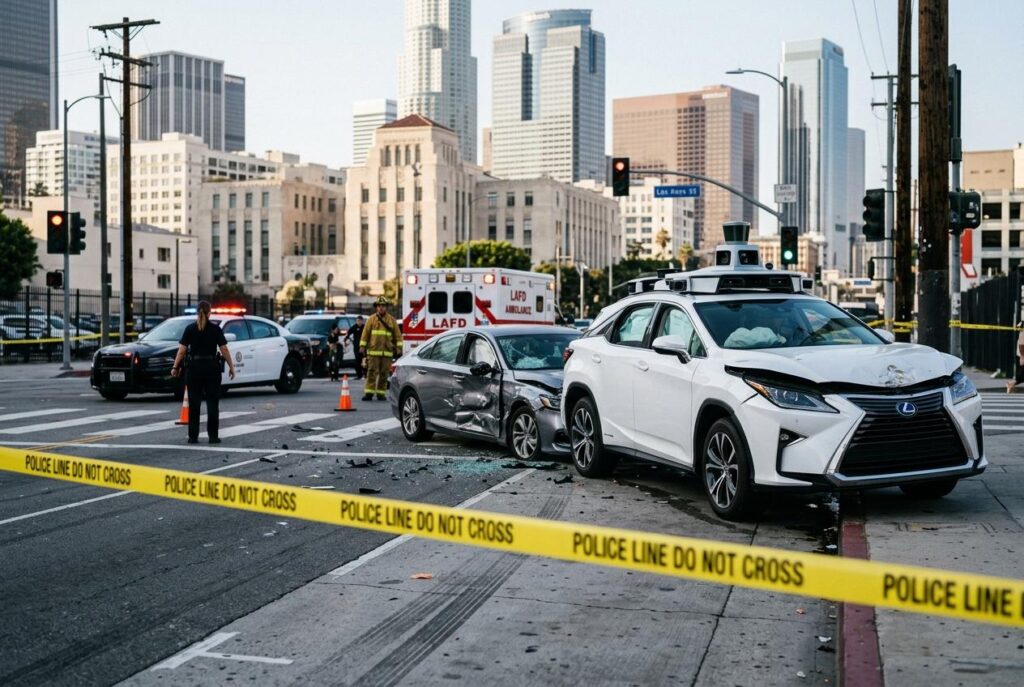
A serious two-vehicle collision involving an autonomous Waymo vehicle near Downtown Los Angeles has left three individuals injured, sending shockwaves through the local community and highlighting the complex legal issues surrounding self-driving car crashes in Southern California. According to initial reports, emergency responders rushed to the scene to treat the victims, whose injuries range in severity. When an accident involves cutting-edge autonomous technology alongside traditional human-driven motor vehicles on busy urban streets, victims and their families are often left with urgent questions about safety, financial recovery, and legal accountability.
Have you or a loved one suffered an injury from an accident involving a self-driving taxi, rideshare vehicle, or commercial automobile in Southern California? At the Law Offices of Samer Habbas & Associates, PC, we understand the immense physical, emotional, and financial toll a sudden crash inflicts on victims. We will guide you through the process and fight for you & your family to get the full compensation you deserve. Whether your crash requires an experienced Los Angeles Pedestrian Accident Attorney, a specialized Culver City Rideshare Accident Lawyer, or an accomplished Anaheim Car Accident Lawyer, our seasoned trial attorneys possess the technical knowledge and resources to hold negligent drivers and tech mega-corporations accountable. Under California civil law, personal injury claims are governed by strict timelines under California Code of Civil Procedure (CCP) § 335.1, which establishes a strict two-year statute of limitations, while potential fatal crashes involve wrongful death remedies under CCP § 377.60.
About the Downtown Los Angeles Autonomous Vehicle Waymo Crash
The incident was reported by local media outlets including NBC Los Angeles, confirming that emergency medical personnel evaluated and transported three individuals to local hospitals following a two-vehicle collision involving a Waymo self-driving vehicle near Downtown Los Angeles. Investigating agencies, including the Los Angeles Police Department (LAPD) and traffic collision investigation units, respond to such scenes to gather physical evidence, examine vehicle telemetry, and interview eyewitnesses.
Downtown Los Angeles features one of the most complex urban traffic environments in California. Broad avenues rapidly converge with freeway off-ramps, active construction zones, complex multi-phase traffic signals, and dense pedestrian traffic. When an autonomous vehicle (AV) operates in this environment, it relies on an array of LiDAR sensors, radar modules, optical cameras, and complex artificial intelligence algorithms to navigate dynamic road hazards.
In collisions involving autonomous vehicles like Waymo, establishing liability requires analyzing complex legal theories of liability:
- Operator / Fleet Owner Negligence: Failure by the operating company to properly monitor autonomous fleet activity, address known software anomalies, or maintain sensory hardware in optimal working condition.
- Products Liability & Technology Defects: Design or manufacturing defects in the self-driving software or hardware components—such as sensor blindness, latency in object classification, or unexpected “phantom braking.”
- Human Driver Negligence: The traditional negligence of the other driver involved in the two-vehicle collision, including speeding, failure to yield, improper lane changes, or distracted driving.
- Third-Party Commercial Liability: Comparative liability involving third-party maintenance contractors, software vendors, or rideshare platform operators.
Why Downtown LA Roadways Pose Unique Hazards for Motorists & AV Technology
Navigating the streets surrounding Downtown Los Angeles presents severe challenges for both human drivers and automated driving systems. High traffic density combined with narrow lane configurations, double-parked delivery trucks, and constant pedestrian crossings creates an environment where a split-second software delay or human error can lead to a multi-injury collision.
According to data published by the National Highway Traffic Safety Administration (NHTSA) and autonomous vehicle collision reports filed with the California Department of Motor Vehicles (DMV), automated vehicles frequently experience unexpected braking events, improper lane positioning, or difficulty predicting human driver behavior at non-standard intersections. When self-driving cars misinterpret visual cues or make sudden unpredicted maneuvers, surrounding motorists have insufficient stopping distance, culminating in severe impacts.
Furthermore, physical road design defects can contribute significantly to urban crashes. Under California Government Code § 835, a public entity may be held liable for injuries caused by a dangerous condition of public property if the property was in a dangerous condition at the time of the injury, the injury was proximately caused by the dangerous condition, and the condition created a reasonably foreseeable risk of the kind of injury that occurred.
California Civil Law: What Victims of Self-Driving & Motor Vehicle Accidents Can Recover
When individuals suffer injuries in a two-vehicle collision involving an autonomous vehicle or commercial automobile, California personal injury law provides comprehensive legal mechanisms for victims to recover financial compensation for their losses.
Compensatory Personal Injury Damages
Injured victims are entitled to recover economic and non-economic damages, including:
- Medical Expenses: Emergency room care, surgical costs, hospitalization, prescription medications, rehabilitation, and long-term physical therapy.
- Lost Income & Earnings Capacity: Recovery of wages lost during recovery and compensation for diminished future earning capacity caused by permanent disability.
- Pain and Suffering: Non-economic recovery for physical pain, emotional distress, mental anguish, loss of enjoyment of life, and disfigurement.
- Property Damage: Full repair or total-loss replacement costs for damaged personal vehicles.
In the most catastrophic crashes resulting in fatal injuries, surviving family members can seek justice through specific statutory actions:
- Wrongful Death Action (California Code of Civil Procedure § 377.60): A cause of action brought by surviving spouses, domestic partners, children, or dependent parents to recover compensation for the loss of financial support, loss of love, companionship, comfort, care, assistance, protection, affection, and funeral and burial expenses.
- Survival Action (California Code of Civil Procedure § 377.30): A cause of action brought by the decedent’s estate to recover economic damages the deceased victim sustained prior to death, such as pre-death medical bills, lost wages, and pre-death pain, suffering, or disfigurement (under recent statutory enhancements).
Who Can Be Held Liable When an Autonomous Vehicle Crash Occurs Near Downtown LA?
Determining legal fault in a multi-vehicle crash involving self-driving technology requires a thorough forensic investigation to identify all potentially liable parties:
1. Waymo & Autonomous Vehicle Technology Developers
As corporate entities deploying autonomous fleets on public roads, technology companies owe a legal duty of care to operate their vehicles safely. Under strict product liability and corporate negligence doctrines, manufacturers and technology operators can be held liable for software bugs, sensor degradation, inadequate remote operator supervision, or failure to properly patch safety critical bugs identified in internal testing.
2. The Other Driver Involved (Human Negligence)
If the crash was precipitated by the driver of the second vehicle—whether due to running a red light, illegal turning, driving under the influence of drugs or alcohol, or speeding—that driver remains primary or co-liable. Under California Vehicle Code § 17150, every vehicle owner is liable for death or injury to person or property resulting from a negligent or wrongful act or omission in the operation of the motor vehicle by any person operating it with the express or implied permission of the owner.
3. Government Entities — Road Defect Cases
If obscured traffic signals, malfunctioning street signs, unmaintained road surfaces, or dangerous roadway design played a role in triggering the crash, municipal or state government agencies (such as the City of Los Angeles or Caltrans) may bear liability under California Government Code § 835. Crucially, claims against government entities require filing a formal administrative claim under California Government Code § 911.2 within six (6) months of the incident date.
California’s Pure Comparative Fault System
Autonomous vehicle companies and insurance adjusters frequently attempt to deflect responsibility onto other drivers or victims involved in the collision. However, California operates under a Pure Comparative Fault rule (Li v. Yellow Cab Co., 13 Cal.3d 804).
Under California’s pure comparative fault standard, an injured victim is not barred from financial recovery even if they are found to be partially at fault for the accident. Instead, the total financial compensation awarded to the plaintiff is reduced in direct proportion to their percentage of assigned fault. For example, if a jury determines that a crash victim suffered $1,000,000 in total damages but was 15% responsible for the collision, the victim is still entitled to recover 85% ($850,000) of the total award from the remaining at-fault defendants.
Statute of Limitations: Don’t Wait to Protect Your Legal Rights
Time is critical following any motor vehicle collision in California. Statutory deadlines dictate how long crash victims and surviving family members have to file legal actions:
- Personal Injury & Wrongful Death Claims: Under California Code of Civil Procedure § 335.1, victims have two (2) years from the date of the crash to initiate a lawsuit against private drivers, corporations, or technology companies.
- Government Claims: Under California Government Code § 911.2, strict administrative notice must be served on public entities within six (6) months of the incident date, or the right to recover damages may be permanently forfeited.
In crashes involving autonomous vehicles like Waymo, early investigation is crucial. Vital electronic evidence—including Event Data Recorders (EDR), raw LiDAR telemetry, onboard camera recordings, and vehicle logs—can be overwritten or lost if legal preservation letters are not issued immediately to corporate entities and insurance carriers.
What Samer Habbas & Associates Does When We Take an Autonomous Vehicle Crash Case
When you retain the Law Offices of Samer Habbas & Associates, PC, our trial lawyers immediately deploy a comprehensive, aggressive legal strategy designed to protect your rights and maximize your recovery:
- Immediate Dispatch of Forensic Investigators: We send accident reconstructionists and evidence specialists to the crash site to measure skid marks, analyze physical vehicle damage, obtain surveillance video from surrounding businesses, and locate eye witnesses.
- Formal Spoliation of Evidence Notices: We serve urgent legal spoliation letters on Waymo, parent corporate entities, and insurance carriers to mandate the permanent preservation of all digital telemetry, AV sensor logs, remote operator communications, and dashcam recordings.
- Retention of Industry Experts: We collaborate with top automotive engineers, software experts, medical professionals, and forensic economists to build an airtight case demonstrating both liability and full lifetime financial damages.
- Relentless Negotiation & Trial Preparation: We negotiate forcefully with corporate legal teams and insurance adjusters. If they refuse to offer full and fair settlement terms, our seasoned trial attorneys are fully prepared to try the case in court before a jury.
Proven Results — Hundreds of Millions Recovered & Counting
Our firm has secured over $380,000,000+ in compensation for personal injury and wrongful death clients across Southern California. Notable verified case results include:
$11,000,000
Top Single Result
$4,007,015
Motor Vehicle Settlement
$3,450,000
Severe Injury Recovery
$2,675,000
Automobile Accident Result
Contact Samer Habbas & Associates After a Downtown LA Car Accident
Hurt in an Autonomous Vehicle or Car Accident? Get Help Now.
Our dedicated team of trial lawyers is ready to fight for you and your family. Available 24/7 for a free, zero-barrier case consultation.
CALL NOW: 888-848-5084
FREE CASE REVIEW — CLICK HERE TO VISIT OUR WEBSITE
Frequently Asked Questions — Autonomous Vehicle & Car Accidents in California
Who is legally responsible when a self-driving Waymo vehicle causes or contributes to a crash?
Liability can fall on multiple entities, including Waymo (the technology provider and fleet operator), software/hardware manufacturers (under strict product liability), or the driver of another vehicle involved in the crash if human error was a factor. A legal investigation is necessary to apportion responsibility accurately.
How long do I have to file a personal injury claim after a crash in Downtown LA?
Under California Code of Civil Procedure § 335.1, you generally have two (2) years from the crash date to file a personal injury lawsuit. However, if a government entity is involved due to road defects, you must submit an administrative claim within six (6) months under California Government Code § 911.2.
What if I was partially at fault for the motor vehicle collision?
California follows a pure comparative fault doctrine. Even if you were partially responsible for the crash, you can still recover financial compensation. Your recovery will simply be reduced by the percentage of fault assigned to you by a judge or jury.
How does an autonomous vehicle investigation differ from a standard car accident?
Autonomous vehicle cases require analyzing complex computer telemetry, LiDAR data, algorithm decision logs, and camera feeds rather than relying solely on police reports and witness testimony. Preserving this digital evidence before it is erased is critical.
What is the difference between a wrongful death action and a survival action in California?
A wrongful death claim (CCP § 377.60) is filed by surviving relatives to recover compensation for their personal loss of support, companionship, and funeral costs. A survival action (CCP § 377.30) is brought by the estate to recover damages the deceased victim suffered prior to death, such as medical bills and pre-death pain and suffering.
Should I speak to insurance adjusters or Waymo representatives after the crash?
No. You should refrain from providing recorded statements or signing settlement releases without consulting an attorney. Corporate adjusters aim to limit financial liability, and your statements could be used to reduce your compensation
How much does it cost to hire Samer Habbas & Associates?
We operate strictly on a contingency fee basis (“No Fee Unless We Win”). You pay zero upfront costs or legal fees unless we successfully recover money for you through a settlement or verdict.
 Victims Killed in Catalina Island Helicopter Crash Identified
  Free Consult
 Call 24/7